Last Updated on April 25, 2026
Estimated reading time: 14 minutes
River Modern at a Glance (Post-Launch Update)
River Modern has moved beyond the usual pre-launch speculation. Based on the latest sales snapshot, the project has sold 421 out of 455 units, leaving 34 units available. That works out to about 92.5% sold, which makes the market response difficult to ignore.
In simple terms, River Modern is a high-density, MRT-led CCR project that has successfully attracted both investors and upgraders seeking central access over space.
This changes how the project should be assessed. River Modern is no longer just a new CCR launch with strong locational attributes. It is now a project where buyers have already shown clear acceptance of the price, location, and product format.
The key question is no longer whether River Modern can attract demand. It already has. The more useful question is whether the remaining units still offer a sensible entry point, especially now that buyer choice is narrower.
River Modern at a Glance
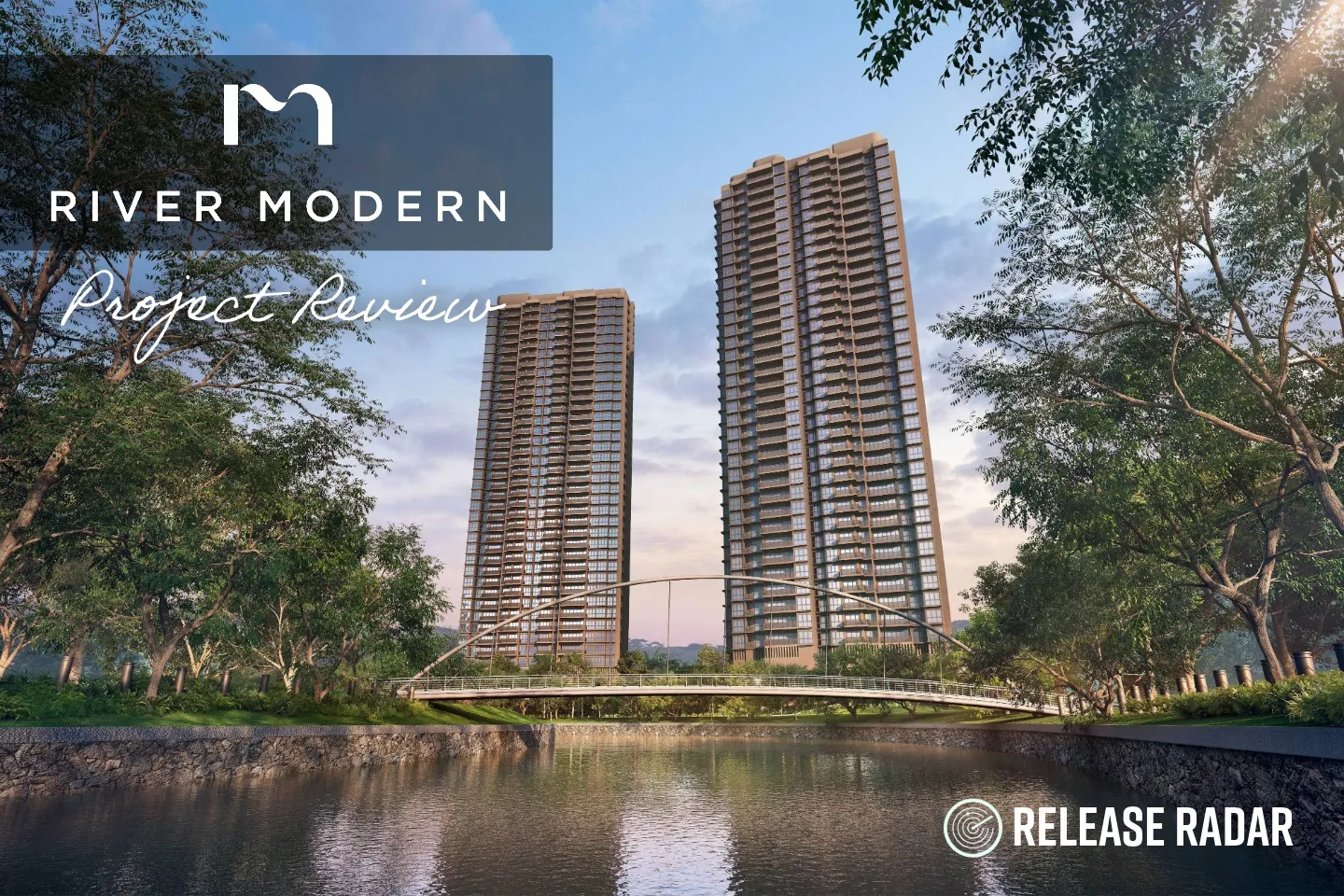
River Modern is a 99-year leasehold condominium in River Valley, positioned around central convenience, MRT access, and riverfront living. Its strongest appeal lies in location and connectivity rather than low-density exclusivity.
- Best suited for: Buyers who value CCR location, MRT access, and lifestyle convenience.
- Also relevant for: Upgraders stretching into the Core Central Region while managing quantum carefully.
- Less suitable for: Buyers looking for larger, more spacious layouts or a quieter low-density environment.
- Main strength: Central location with strong transport and lifestyle access.
- Main trade-off: Higher-density living and more compact urban layouts.
How Has River Modern Performed at Launch?
The latest sales figures show strong absorption across all unit types. Of 455 units, 421 have been sold, leaving 34 available. (As of 25-Apr-2026)
| Unit Type | Sold | Available | Total |
|---|---|---|---|
| 2 Bedroom | 158 | 17 | 175 |
| 3 Bedroom | 202 | 8 | 210 |
| 4 Bedroom | 61 | 9 | 70 |
| Total | 421 | 34 | 455 |
The strongest signal comes from the 3-bedroom segment, where 202 out of 210 units have been sold. This suggests that demand is not limited to investors or smaller-unit buyers. River Modern appears to have attracted genuine own-stay and upgrader demand as well.
This is important because CCR projects are often discussed mainly through an investment lens. River Modern’s sales pattern suggests something more nuanced: buyers are responding to it as a central, liveable product with manageable entry points, not only as a rental asset.
What the Sales Performance Suggests
The strong take-up supports the idea that River Modern is functioning as a bridge product. It gives buyers access to a CCR address, direct connectivity, and a River Valley location without needing to move into the most expensive luxury segment of the market.
For buyers who were comparing high-priced RCR projects with entry-level CCR options, River Modern may have appeared relatively compelling. This helps explain why the project has seen strong absorption, especially among 3-bedroom buyers.
However, strong sales do not automatically mean every remaining unit is a good buy. At this stage, the remaining stock is likely to offer a narrower range of stacks, floors, facings, and layout choices. Buyers should evaluate the available units carefully instead of relying only on headline sales momentum.
Is River Modern a Good Buy?
River Modern is a strong fit for buyers who place a high value on central convenience, MRT access, and lifestyle connectivity. Its sales performance shows that the market has accepted the project’s overall positioning.
That said, it should not be viewed as a low-risk purchase simply because many units have already sold. The main trade-offs remain the same: density, compact layouts, and the need to carefully compare pricing with nearby resale and new launch alternatives.
In short, River Modern looks strongest for buyers who understand what they are paying for: access, convenience, and CCR positioning. It looks weaker for buyers who expect generous space, privacy, or a more boutique residential environment.
If you are considering River Modern and want to review the latest available units, stacks, and pricing in more detail, you can refer to this River Modern availability and pricing breakdown.
Quick Takeaways
- Strong market response: Over 90% of units sold, with particularly strong demand for 3-bedroom units.
- Positioning: A high-density CCR project driven by location, MRT access, and riverfront proximity.
- Buyer profile: Mix of investors and upgraders entering the CCR at a more accessible quantum.
- Main trade-off: Compact layouts and density versus central convenience.
- Key consideration: Remaining units are limited, so selection and stack quality matter more at this stage.
River Modern: Key Pros and Cons
Pros
- Strong market acceptance: Over 90% of units sold, indicating clear demand at current pricing levels.
- Prime central location: Situated in River Valley with direct MRT access and proximity to Orchard and Robertson Quay.
- Riverfront element: One of the few remaining developments with meaningful river frontage in the area.
- Broad buyer appeal: Strong take-up of 3-bedroom units suggests relevance beyond investors.
Cons
- High-density environment: 455 units in a central plot means less exclusivity compared to boutique CCR developments.
- Compact layouts: Unit efficiency comes with tighter proportions, especially for smaller units.
- Limited remaining choice: With most units sold, buyers are left with a narrower selection of stacks and facings.
- Competitive CCR landscape: Buyers should still benchmark against nearby resale and new launch alternatives.

Project Snapshot
| Project | River Modern |
| Developer | GuocoLand |
| Location | River Valley Green (District 9) |
| Tenure | 99-year leasehold |
| Total Units | 455 residential units |
| Building Height | Two 36-storey towers |
| Commercial Component | Limited retail at Level 1 |
| Expected TOP | 2H 2030 |
Preview period: 20 February to 1 March 2026.
River Modern Location
River Modern sits along River Valley Green on one of the last remaining residential sites directly beside the Singapore River, with very limited land available for similar riverfront plots to come to market.
This is a prime Core Central Region (CCR) location with direct access to Great World Mall & MRT. For owner-occupiers, this reduces friction in day-to-day commuting. For investors, it broadens tenant demand—especially for professional households who prioritise central access over internal space.
River Valley Green also attracts a fairly defined profile. The appeal lies in central living without the intensity of Orchard Road’s core. The lifestyle here is quieter and more linear, anchored by the Singapore River, Kim Seng Park, and walkable routes towards Robertson Quay. Amenities exist, but they are spread out rather than clustered right at your doorstep.
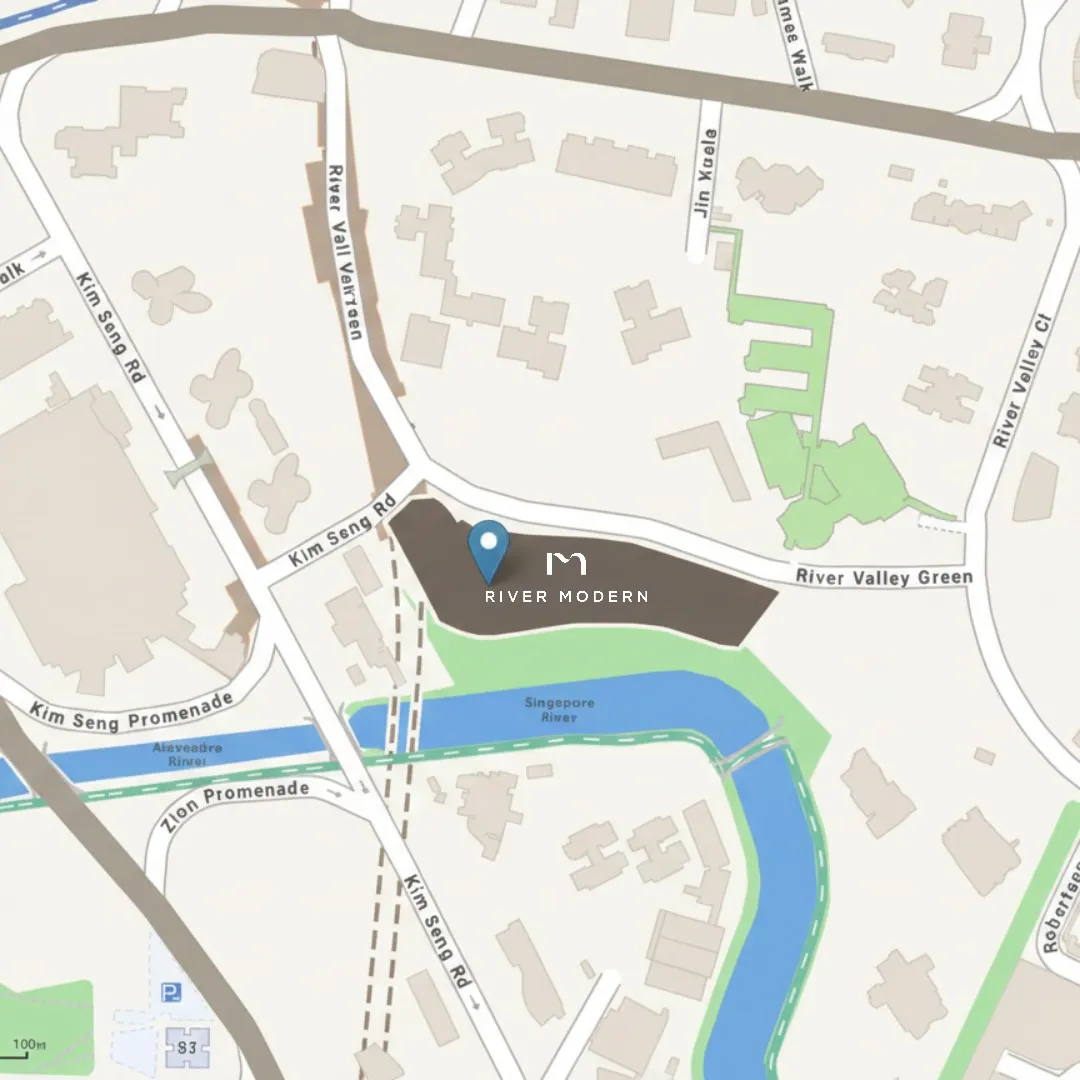
This context matters because River Modern is not launching into an emerging area. It is entering a built-up residential stretch where density is visible and buyers can compare several similar options within a tight radius. That shapes pricing behaviour, resale competition, and the range of outcomes over time.
River Modern is also located beside River Valley Primary School, which may be relevant for some owner-occupiers with school-going children. While school proximity is rarely the main driver for CCR purchases, it adds a layer of practicality for families already considering River Valley for its central access and established surroundings.
What River Modern Is Competing With

River Modern is launching into a River Valley market that is already well defined by recent and ongoing supply. This is not a first-mover project, and buyer expectations here are shaped by nearby developments that have already established benchmarks for pricing and demand.
Within the immediate area, projects such as Promenade Peak and Zyon Grand provide useful demand signals. In this part of the CCR, demand is typically real but price-sensitive. Buyers have alternatives, and they compare closely before committing—especially when multiple large projects sit within the same corridor.
That matters because price upside here depends more on how River Modern compares with nearby options than on any shortage of supply. Cross-shopping is baked into the market, so pricing discipline tends to matter more than novelty.
Additional supply from developments such as River Green and The Robertson Opus reinforces this dynamic. With several sizeable projects concentrated along the same stretch of the Singapore River, competition here is permanent, not driven by market timing. This usually keeps price movements measured and reduces the chance of any single project pulling far ahead.
At the same time, visible market activity tends to support resale liquidity and steady rental demand, especially for well-connected and sensibly priced developments. The real question is whether River Modern can hold its ground against established reference points in the same corridor, including this earlier comparison of how nearby launches were received.
The Developer and What It Means for Buyers
River Modern is developed by GuocoLand, which has recent experience delivering high-density residential projects in central, constraint-led locations. In River Valley itself, the developer delivered Martin Modern, a development further along the Singapore River that reflects a similar urban CCR setting.
That experience helps reduce basic planning and execution risk, but it does not determine outcomes. Pricing, buyer response, and performance still depend on the specific market conditions of each launch.
Unit Mix & Layouts at River Modern
The more important takeaway is what the unit mix suggests. This is not a project trying to compete on generous space, and it is not pushing ultra-small, investment-only layouts either.
| Unit Type | Approx. Size Range | Share of Total Units |
|---|---|---|
| 2 Bedroom | ~540 – 690 sqft | ~45% |
| 3 Bedroom | ~800 – 1,100 sqft | ~40% |
| 4 Bedroom | ~1,460 – 1,830 sqft | ~15% |
| Total | 455 units |
Instead, it leans into compact, liveable formats that are easier to price and easier to exit in a CCR market where quantum matters. Layouts are designed around efficiency rather than adaptability. Circulation space is kept tight, internal corridors are minimised, and usable area is prioritised over secondary spaces.
For first-time buyers, this is where expectations need calibration. Efficient layouts can live well when lifestyle habits fit the space, but they are less forgiving when needs change. Work-from-home, storage, or a shift from couple to family life tends to introduce trade-offs rather than simple adjustments. Buyers who already live compactly will find efficiency attractive. Buyers expecting flexibility may feel constrained over time.
For investors, the same efficiency can be a feature. Compact 2- and 3-bedroom units in central locations tend to attract consistent tenant demand, especially from professional households who prioritise access and commute time. A mix without extremes also helps resale liquidity because the buyer pool stays broad.

Living Experience: Space, Density, and Comfort
In a dense River Valley setting, internal environment becomes part of the value proposition. Where the surrounding context is built-up and competitive, projects often try to create relief within the site—through landscaping, communal spaces, and a more buffered internal feel.
The trade-off is straightforward. You are paying for central access and a prime corridor, not for sprawling grounds or low-density privacy. Livability here is less about having more space and more about how well the development manages density. This includes circulation, views, noise buffers, and the quality of internal common spaces.
Pricing Logic: What to Focus On (and What to Ignore)
At this stage, the most useful approach is to focus on pricing logic rather than debating whether a number is “high” or “low.” In a corridor with multiple nearby benchmarks, River Modern will not be priced in a vacuum. Buyers will compare it against recent launches, current availability, and the practical differences in access, unit efficiency, and long-term resale competition.
Indicative starting prices released ahead of launch place River Modern from around the high-$2,800 psf range, depending on unit type and stack. At these levels, the project sits broadly in line with nearby River Valley launches rather than pushing a new pricing ceiling. This reinforces the earlier point that buyers here respond more to comparison and value alignment than to scarcity or novelty.
For first-time buyers, the key risk is treating a CCR purchase like a generic home upgrade. CCR pricing tends to compress space, and the premium is paid through access and positioning. For investors, the risk is assuming upside will be driven by scarcity. In this River Valley pocket, demand can be healthy without being explosive, and measured appreciation is often more realistic than sharp short-term gains.
River Modern vs Nearby Alternatives
River Modern is often compared with other Core Central Region developments, particularly those in the River Valley and Singapore River area. The key differences come down to density, pricing, and positioning.
| Project | Strength | Trade-Off | Best For |
|---|---|---|---|
| River Modern | Direct MRT access, strong connectivity, newer entry pricing | Higher density, compact layouts | Buyers prioritizing convenience and CCR entry |
| Martin Modern | More exclusive feel, larger land parcel, established environment | Older development, typically higher entry pricing | Buyers prioritizing space and long-term own-stay comfort |
In simple terms, River Modern leans toward accessibility and connectivity, while developments like Martin Modern lean toward space and exclusivity. The right choice depends on whether buyers prioritise location efficiency or residential comfort.
Who River Modern Fits Best
First-time buyers who value central access, MRT connectivity, and an established River Valley environment will find River Modern easy to justify—provided expectations on internal space are realistic. This suits buyers who prioritise commute, location stability, and long-term usability over flexibility or a self-contained “destination” lifestyle.
Investors who want a central-location holding with broad tenant appeal may also find the logic workable here. The direct MRT connection helps. The trade-off is that performance is likely to be shaped by comparison and competition, so the focus should be on entry price discipline and exit liquidity rather than aggressive upside assumptions.
Buyers who may struggle are those who need generous space, expect layouts to absorb lifestyle changes easily, or are stretching budgets while relying on “future upside” to justify today’s premium. In River Valley, competition and benchmarking tend to keep outcomes more measured than dramatic.
So, Where Does River Modern Fit?
River Modern is not difficult to evaluate once the frame is clear. It is a central, MRT-connected River Valley project entering a market with visible supply and established benchmarks. That context reduces the likelihood of surprise outperformance, but it can support demand resilience and liquidity when the unit type and entry price are sensible.
In other words, River Modern should be assessed as a position within a competitive CCR corridor, not as a standalone launch. Buyers who align their intent to its trade-offs will find it easier to make a clear decision. For a broader view of how 2026 launches fit into the current cycle, see the anchor guide: Singapore new launch condo outlook 2026.
In short, River Modern is one of several comparable options in a competitive CCR market. Buyers who are clear about what they are prioritising — whether that’s location, MRT access, or pricing discipline — tend to make clearer decisions here, especially given how the 2026 new-launch market is shaping up.
Ultimately, River Modern works best for buyers who are consciously trading space for location and accessibility, rather than those seeking long-term residential comfort or exclusivity.
If you’re weighing River Modern against other nearby launches, or trying to decide whether this kind of CCR project fits what you’re prioritising, I’m happy to talk it through.
Frequently Asked Questions
River Modern can work for first-time buyers who are clear about their priorities. The direct MRT connection and central River Valley location are strong positives, but unit sizes are more compact than what buyers might be used to in city-fringe or OCR projects. Buyers who value location and commute convenience over internal space tend to find the fit clearer here.
River Modern sits in a corridor where buyers and tenants have alternatives, so performance is shaped more by relative pricing and demand than by scarcity. The MRT connection supports rental demand, while surrounding supply keeps price growth measured. For investors, entry price discipline and exit liquidity matter more here than short-term upside.
Buyers are best served by focusing on what they are prioritising. River Modern is optimised for central access, MRT convenience, and predictable demand in a competitive CCR market. It is less about maximising space or lifestyle features. Being clear on that distinction usually makes the decision easier.
River Modern may appeal to investors due to its central location, MRT connectivity, and strong rental demand profile. However, buyers should still compare entry prices with nearby alternatives and consider long-term supply in the CCR.
The project combines central location, direct MRT access, and relatively accessible CCR pricing. Strong demand for 3-bedroom units suggests it also appeals to upgraders, not just investors.
The main considerations include high density, compact layouts, and competition from other CCR developments. Remaining units may also be limited in terms of choice and positioning.
It can work for own-stay buyers who prioritise central convenience and connectivity. However, those seeking larger layouts or a quieter environment may prefer lower-density alternatives.
River Modern offers better connectivity and newer pricing entry, while Martin Modern provides a more established environment with a greater sense of space. The decision depends on whether convenience or residential feel is the priority.