Estimated reading time: 5 minutes
The Tanjong Rhu Road GLS site drew five bids and cleared at about $1,455 psf ppr. That combination matters more than the headline number suggests.
Not because five is a large turnout, but because of who showed up. This wasn’t a speculative tender. These were established developers, already sitting on inventory, choosing to compete for the same site in a location that hasn’t seen a private residential land release in decades.
When that happens, it usually tells me the debate wasn’t about whether the location works. It was about how much risk each developer was willing to underwrite.
What five bids really tells me about Tanjong Rhu GLS
Buyers often read bid spreads as a confidence issue. In reality, they’re usually about margin tolerance.
Developers don’t arrive at the same land price assumptions and then randomly diverge. They differ on questions like how fast units need to move, how much pricing resistance they expect, and how comfortable they are carrying absorption risk if sales stretch out.
In this case, the winning bid effectively locked in today’s replacement cost for Tanjong Rhu. Once that happens, the market doesn’t wait for the building to go up before recalibrating. The benchmark quietly shifts.
And this isn’t a boutique site. A project of this scale is likely to mean roughly 500-plus units across multiple high-rise blocks. That’s real volume. Pricing discipline matters — which is exactly why the bid spread reflects risk appetite, not confusion.
This isn’t just a land story — transformation is already happening next door

What makes this GLS result more telling is what’s already happening immediately beside it.
Over the last two years, three major public housing projects have been launched along the same Tanjong Rhu stretch — Tanjong Rhu Riverfront I, Riverfront II, and Tanjong Rhu Parc Front. All were classified under Prime or PLH frameworks.
They weren’t priced as one-off specials. They were broadly in line with other Prime BTOs launched elsewhere. Yet demand held up — in some cases strongly — despite longer MOPs and tighter resale conditions.
That’s an important signal. It suggests people weren’t chasing subsidies or novelty. They were choosing this location specifically, even under restrictive ownership rules.
When both mass-market buyers and private developers independently commit to the same strip, it tells me interest here is structural, not cyclical.
Why Tanjong Rhu behaves differently from the rest of District 15
Tanjong Rhu has always functioned as its own micro-market.
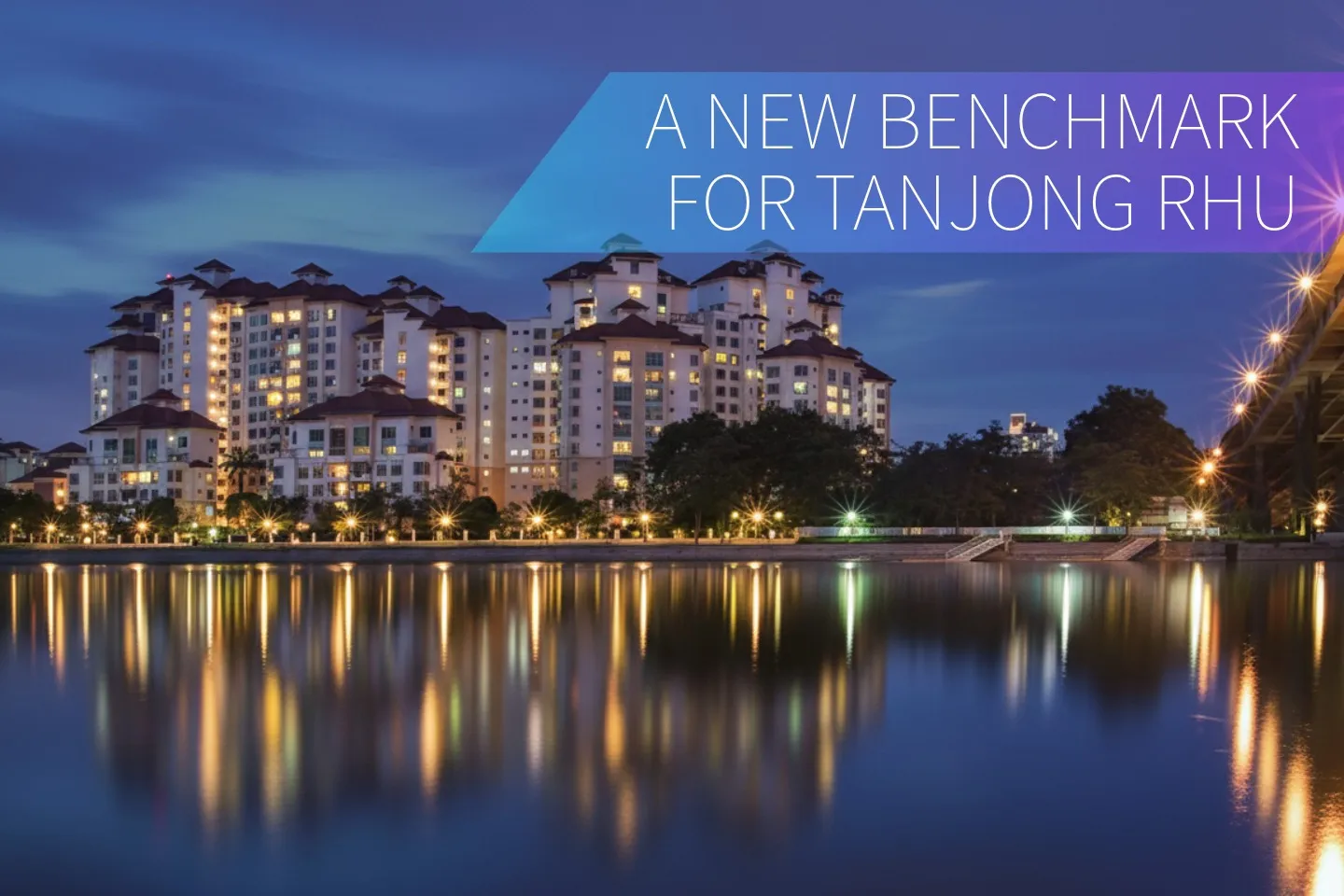
This isn’t a place buyers end up in by accident. They come for the water, the openness, and the proximity to the city without being surrounded by it. River on one side, basin and parkland nearby, and a direct corridor toward Marina Bay.
Daily life here is shaped by the Kallang Basin promenade, East Coast Park connections, and the Sports Hub. On major evenings, residents don’t need to enter the CBD to feel it — skyline glow and fireworks are already part of the backdrop.
Add modern rail connectivity into that mix, and the location stops behaving like a fringe address. It starts behaving like a waterfront extension of the city.
What the new land cost changes
A land rate of about $1,455 psf ppr doesn’t just affect the future project sitting on that site. It resets expectations for the entire immediate area.
Once construction costs and financing are factored in, a future 99-year launch here is unlikely to price like an older District 15 reference. The conversation naturally drifts toward the $3,000 psf range, whether buyers are ready for it or not.
That number becomes the new anchor. And anchors change how everything nearby gets judged.
A pricing gap inside the same Tanjong Rhu micro-market
This is where I think the story becomes easy to miss if you only read the headlines.
Within the same walking environment — not a neighbouring enclave, not a broader district comparison — there are existing projects that were priced before this replacement cost was established.
Arina East Residences sits just off Tanjong Rhu Road itself. Same immediate surroundings. Same access to the waterfront and the city-fringe corridor. It’s also freehold, and it’s still discussed around the $2,6xx psf range.
This isn’t about declaring one project better than another. It’s about recognising when two options sit in the same micro-market but are anchored to very different pricing assumptions.
Once a new leasehold launch nearby is forced to price off today’s land cost, that comparison becomes unavoidable for buyers who are already committed to living here.
What I’m watching from here
I’m watching how quickly the market internalises the new benchmark.
Not whether prices jump overnight, but how buyer expectations adjust once the first new launch in this strip shows its hand. In tight waterfront micro-markets, that shift usually happens quietly — and then all at once.
If you’re following how new launches are likely to be positioned over the next cycle, this fits squarely into the broader patterns discussed in my 2026 new launch outlook.
For Tanjong Rhu specifically, the signal is already there. You just have to look slightly past the headline bid.
Frequently Asked Questions
Not immediately, and not uniformly. But it does reset the benchmark future launches will be judged against. In micro-markets with scarce supply, expectations usually shift before the building even appears.
Waiting makes sense if you specifically want a brand-new product on that exact site and you’re prepared for the pricing that comes with today’s land cost. If you’re buying the location more than the novelty, it’s worth comparing what’s already available inside the same strip.
Freehold doesn’t automatically mean “better”, but it does change the long-term framing — especially when new supply nearby is 99-year and priced off a higher replacement-cost benchmark.