Last Updated on April 27, 2026
Estimated reading time: 14 minutes
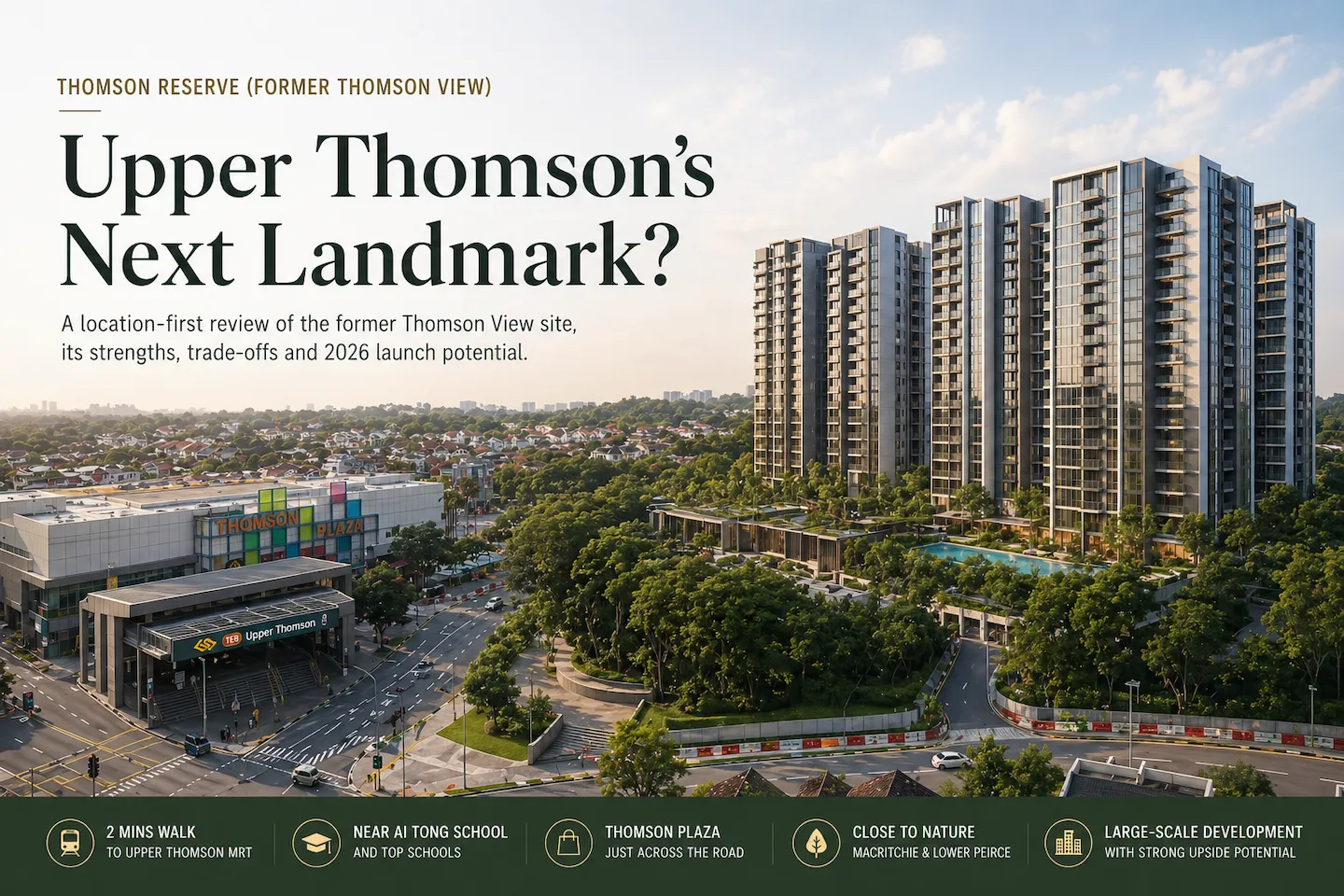
Former Thomson View has long been one of the more closely watched redevelopment sites in Upper Thomson. Its transformation into Thomson Reserve could now make it one of Singapore’s biggest launch stories of 2026.
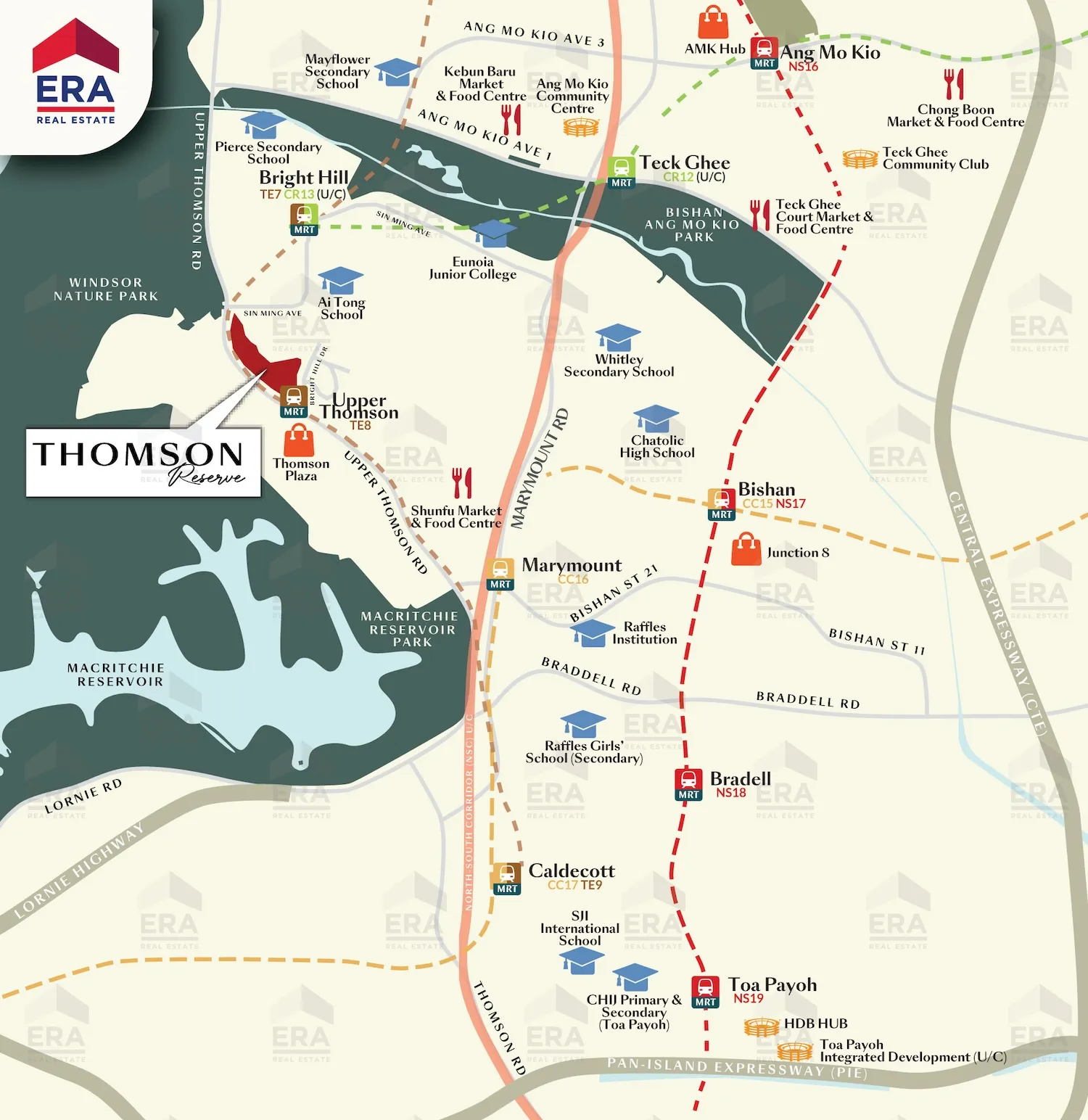
The reasons are easy to understand. Thomson Reserve sits in a mature district with strong family appeal, close proximity to Ai Tong School, access to Upper Thomson MRT, Thomson Plaza, the Upper Thomson food and lifestyle belt, and nearby greenery such as MacRitchie Reservoir, Lower Peirce Reservoir, and Windsor Nature Park.
It also has scale. That gives the project a different kind of weight compared with smaller boutique launches. A large site can support more facilities, a stronger internal community, and a wider mix of unit types. But scale also brings trade-offs, especially around density, exit competition, stack selection, and pricing.
For buyers comparing Thomson Reserve against other major launches in the pipeline, this project should be viewed in the wider context of Singapore’s new launch condo outlook for 2026. Thomson Reserve may have many of the right ingredients, but the real question is whether its likely premium can be justified by long-term value.
Project Snapshot: What We Know So Far About Thomson Reserve
Thomson Reserve is the redevelopment of the former Thomson View en bloc site, a major private residential land parcel in District 20’s Upper Thomson / Bright Hill enclave.
| Former Site | Thomson View |
| District | District 20 (Upper Thomson / Bright Hill) |
| Tenure | 99-year leasehold |
| Developers | UOL Group, Singapore Land Group, and CapitaLand Development |
| Estimated Scale | About 1,240 units |
| Land Cost | About $1,178 psf ppr |
| Key Strengths | Ai Tong proximity, MRT access, Thomson Plaza, mature lifestyle amenities, nature access |
The developer lineup alone makes Thomson Reserve notable. UOL, SingLand, and CapitaLand are all major names, which suggests this is unlikely to be treated as a minor District 20 launch.
Its scale also matters. At an estimated 1,240 units, Thomson Reserve is likely to compete more as a major family-lifestyle mega-development than a smaller niche project. That could support stronger facilities, landscaping, and broader buyer reach, while also introducing familiar large-project considerations such as density, stack selection, and future internal competition.
The land cost is equally important — not because it predicts exact launch pricing, but because it signals that Thomson Reserve is unlikely to be positioned as a budget entry. Buyers may ultimately want to focus less on whether the project commands a premium and more on whether that premium feels justified relative to execution, location, and nearby district benchmarks.
In short, Thomson Reserve already appears poised to be a significant Upper Thomson launch. The bigger long-term question may not be whether it attracts attention, but how effectively it converts its strong site fundamentals into genuine buyer value.
Why Former Thomson View Was Already a Closely Watched Site
Not every redevelopment site carries the same level of anticipation. Former Thomson View stands out because large private residential sites in mature Upper Thomson are not common.
Unlike some new launches that depend heavily on future transformation, Thomson Reserve enters a district that already has transport, retail, food, schools, private housing, landed homes, and access to nature. This matters because buyers are not simply betting on a future neighborhood. They are buying into an area that already works for many households today.
This is one reason the former Thomson View site has strategic appeal. It is not only about the address. It is about the combination of location, land size, family utility, and redevelopment potential.
Upper Thomson’s Real Strength: Schools, MRT, Lifestyle and Nature
Upper Thomson’s appeal is not built on a single factor. It is the layering of several practical advantages that makes the location interesting.
Ai Tong School and Family Demand
For family buyers, Ai Tong School is likely to be one of Thomson Reserve’s strongest demand anchors. School proximity can shape buyer behavior in Singapore, especially for families seeking a long-term home within a familiar education ecosystem.
This does not mean every buyer will be school-driven. But it does mean Thomson Reserve may benefit from a deeper owner-occupier pool than a project relying mainly on investor demand.
Upper Thomson MRT and Thomson Plaza
Transport and daily convenience are also important. Upper Thomson MRT improves connectivity, while Thomson Plaza provides a mature retail anchor. Around Upper Thomson Road, buyers also get access to food options, cafes, enrichment centers, and daily services.
This makes the location more liveable than a purely residential enclave. Buyers are not just paying for a condo; they are paying for a district that already supports daily routines.
MacRitchie, Lower Peirce and Greenery Appeal
One of Thomson Reserve’s more distinctive strengths is its proximity to major green and reservoir areas. MacRitchie Reservoir, Lower Peirce Reservoir and Windsor Nature Park help create a lifestyle angle that many dense new launch locations cannot easily replicate.
Depending on final orientation and stack selection, selected higher-floor units may also enjoy better openness or greenery-facing potential. This should not be treated as a blanket advantage for every unit, but it could matter meaningfully for buyers who value views, airiness and a stronger nature connection.
Site Layout and Stack Selection May Matter More Than Usual
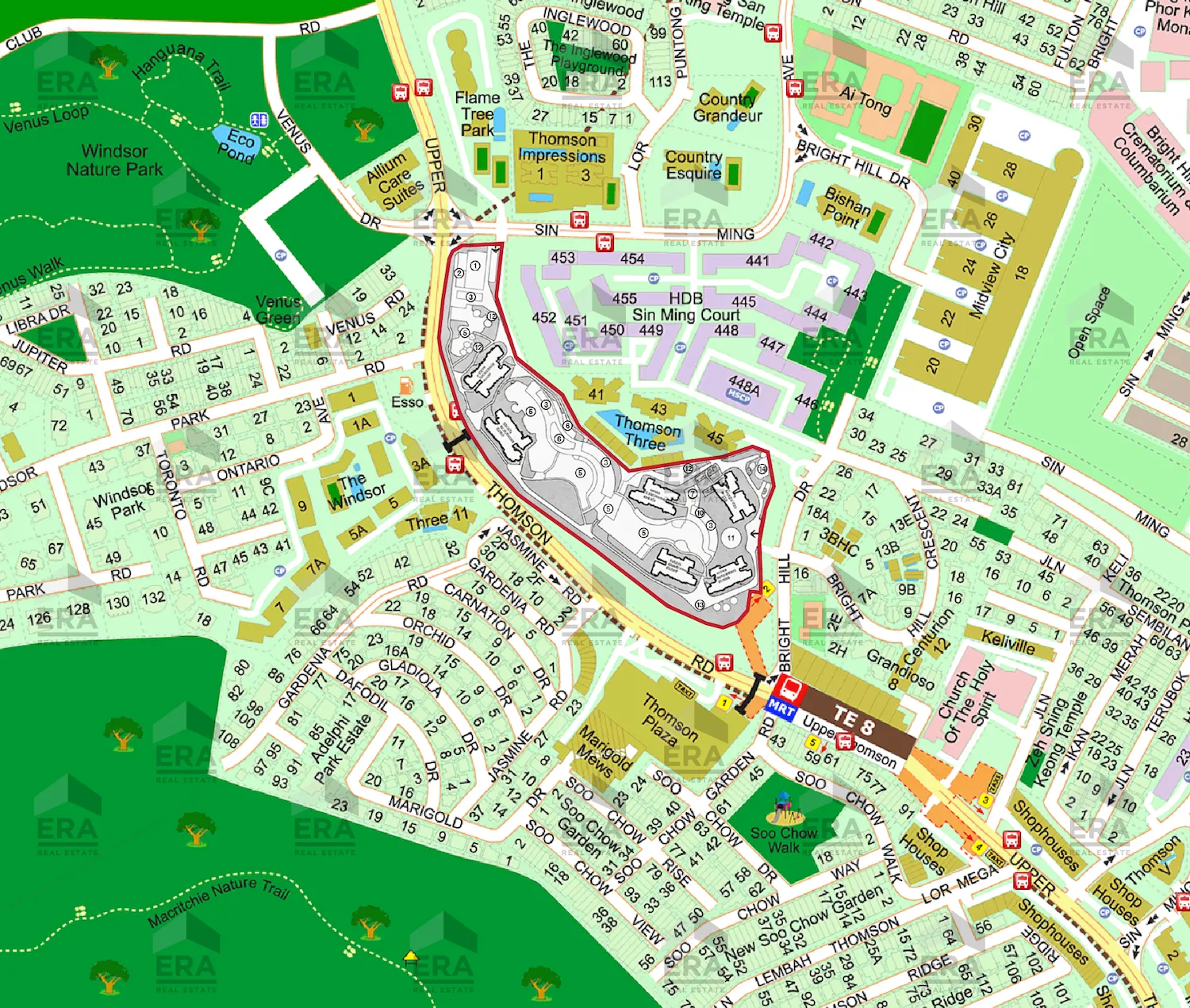
Thomson Reserve’s location has many advantages, but buyers should not assume that every stack will benefit equally.
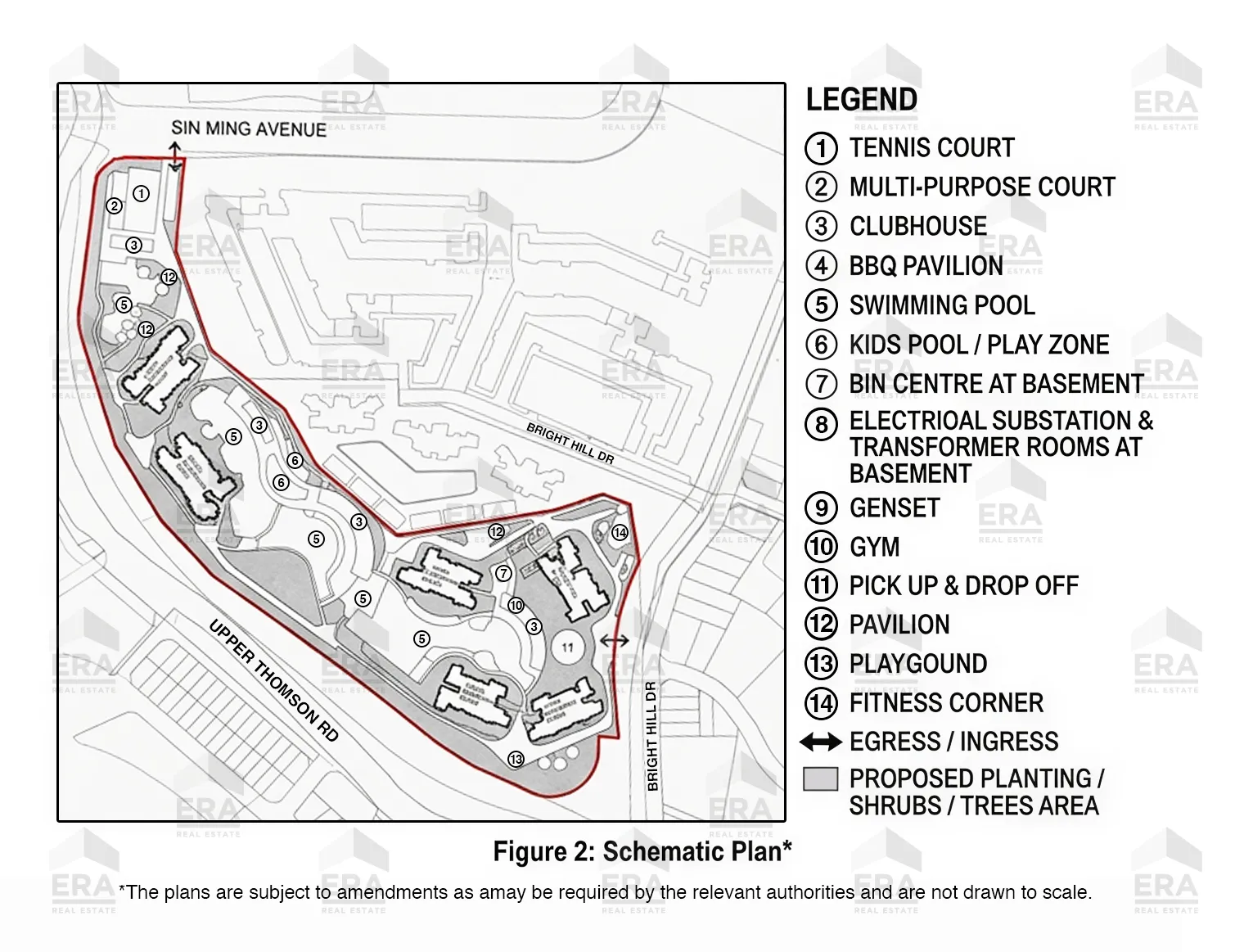
The site appears to have multiple frontages and different surrounding conditions. Some stacks may benefit from better openness, greenery orientation or quieter facing. Others may be more exposed to road movement, traffic noise or internal density.
This means unit selection may become a key part of the buying decision. In a large project, the difference between a stronger and a weaker stack can be meaningful, especially when buyers are paying new-launch pricing.
This is one reason buyers may benefit from understanding how layout trade-offs in large developments can shape liveability, efficiency, and long-term resale appeal beyond headline square footage alone.
Once the final site plan and floor plans are released, buyers should look closely at facing, distance between blocks, afternoon sun, road exposure, entrance points, lift access, facility noise, and whether the chosen stack truly captures the project’s strongest advantages.
What Nearby Resale Projects Reveal About Upper Thomson
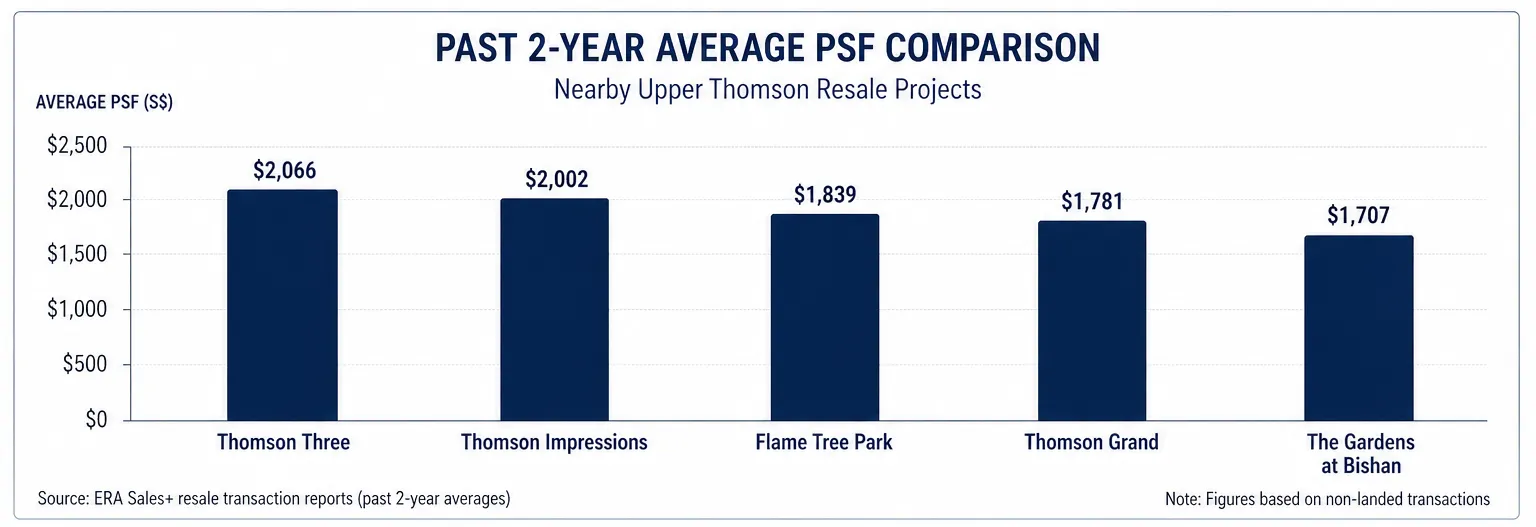
One reason Thomson Reserve deserves attention is that Upper Thomson is not an untested location. Nearby resale projects already give useful clues about buyer demand, price resilience, and the level of premium this micro-market can support.
Two of the most useful nearby benchmarks are Thomson Three and Thomson Impressions. Both are relatively modern 99-year leasehold projects in the same broad Upper Thomson/Bright Hill ecosystem.
| Project | TOP | Units | Past 2Y Avg PSF | Past 2Y Avg Profit | Unprofitable Transactions |
|---|---|---|---|---|---|
| Thomson Three | 2016 | 445 | About $2,066 psf | About $547k | None recorded |
| Thomson Impressions | 2018 | 288 | About $2,002 psf | About $394k | None recorded |
| Flame Tree Park | 1989 | 160 | About $1,839 psf | About $1.84m | None recorded |
| Thomson Grand | 2015 | 361 | About $1,781 psf | About $622k | None recorded |
| The Gardens at Bishan | 2004 | 756 | About $1,707 psf | About $964k | None recorded |
The key takeaway is not that Thomson Reserve will automatically outperform. That would be too simplistic. The more useful observation is that the nearby Upper Thomson and Bright Hill markets have already demonstrated their ability to support meaningful resale pricing.
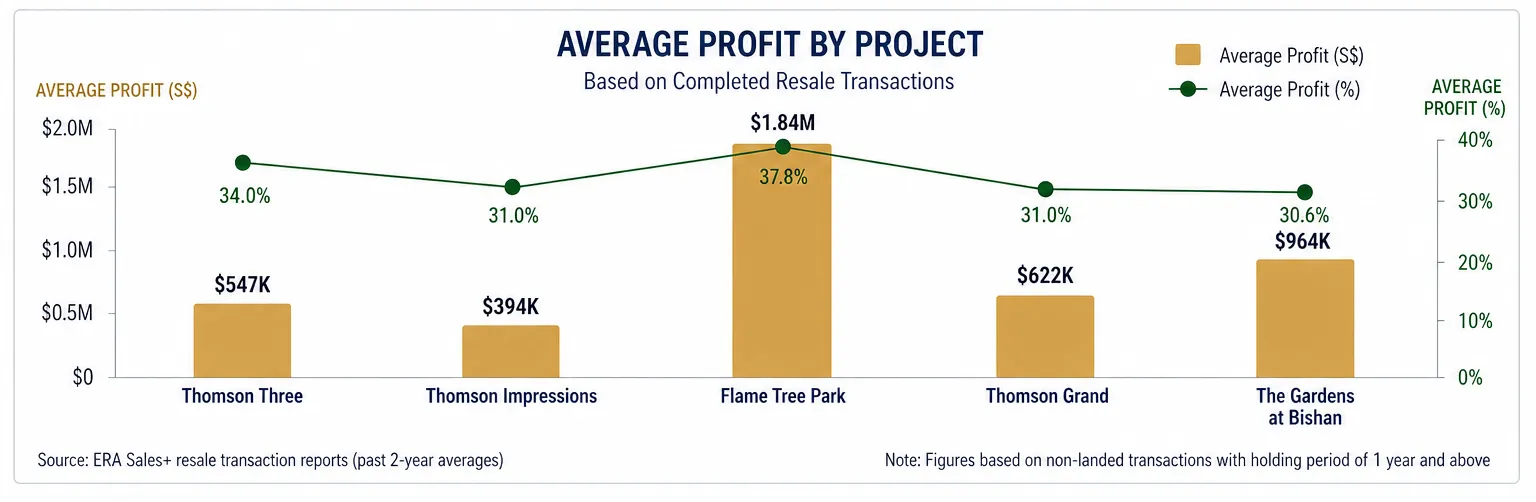
Thomson Three and Thomson Impressions are especially relevant because they show that buyers have already accepted resale pricing around the $2,000 psf level for relatively modern projects in this area. That gives Thomson Reserve a stronger district foundation than a launch located in a completely untested precinct.
At the same time, this data also raises the bar. If Thomson Reserve launches at a significant premium over nearby resale benchmarks, buyers should ask what they are receiving in return. Newness, facilities, scale, and branding may justify some premium, but the entry price still matters.
Mega Development Advantage: Why Scale Can Help
Thomson Reserve is likely to be evaluated partly as a large-scale development. That matters because scale can be a real advantage when executed well.
A larger project can usually support a wider range of facilities, stronger landscaping, more family-friendly spaces, and a broader internal community. For own-stay buyers, especially families, this can improve day-to-day living.
Large developments may also appeal to buyers who want a fuller condo lifestyle rather than a smaller project with limited amenities. This is one reason mega developments can remain attractive when they offer a strong location and sensible pricing.
However, scale should not be treated as an automatic advantage. Large developments can offer stronger facilities, broader unit mixes, and a fuller lifestyle ecosystem, but they can also introduce trade-offs around density, internal competition, and long-term exit dynamics.
For buyers assessing Thomson Reserve, it may be useful to consider how boutique condos and mega developments differ in long-term value, especially given how project size can influence both lifestyle experience and resale strategy.
Mega Development Trade-Offs: What Buyers Should Watch
The main concern with large projects is not whether they can attract buyers at launch. Many large launches can sell strongly when the pricing and narrative are compelling.
The bigger question is what happens later.
In a large development, future sellers may face more internal competition. If many similar units are available at the same time, buyers have more choices, and weaker units may need to compete harder on price. This is especially relevant for common layouts and less differentiated stacks.
Rental competition can also be more visible in large projects. If many landlords list similar units, rental pricing may become more competitive, particularly for smaller unit types.
For Thomson Reserve, this does not mean scale is a weakness. It means buyers should be more selective. The better units may be those that combine efficient layouts, good orientation, lower road exposure, better privacy, practical quantum, and stronger long-term exit appeal.
How Thomson Reserve May Compare With Jadescape, AMO and Lentor
Buyers considering Thomson Reserve may also compare it with other projects in the broader central-north corridor, including Jadescape, AMO Residence, and the Lentor launches.
Jadescape provides a useful mega-development comparison because it is also large-scale and located within a mature residential region. AMO Residence is relevant because it reflects strong family and AMK-area demand. Lentor, meanwhile, represents a newer transformation cluster with multiple launches competing within the same broader northern corridor.
But Thomson Reserve’s positioning is not identical to any of these.
Compared with Lentor, Thomson Reserve may feel less like a pure transformation bet and more like a mature-district scarcity play. Compared with Jadescape, it may offer a different Upper Thomson lifestyle, with a reservoir-adjacent feel. Compared with AMO, it may compete for similar family-oriented buyers, but with a different mix of MRT, mall, school, and nature appeal.
This distinction matters because buyers should not compare projects only by price per square foot. They should compare the type of lifestyle, exit market, and buyer pool each project is likely to attract.
Pricing Pressure: The Biggest Question for Thomson Reserve
Thomson Reserve has many things going for it. That may also be the reason pricing becomes the most important issue.
Because this is a former en bloc site rather than a standard GLS parcel, buyers should expect the land cost and redevelopment economics to influence pricing. When a project combines en bloc premium, a mature district, school proximity, MRT access, lifestyle convenience, nature adjacency and large-scale facilities, the launch narrative can become very strong.
The risk is that too much of the future upside may be priced in from the start.
Nearby resale projects suggest that Upper Thomson already has a strong foundation. But that does not mean any new launch price is automatically justified. Buyers should ask whether the premium over nearby resale options is supported by better product quality, stronger facilities, better layouts, superior views, newer lease, and long-term exit appeal.
This is likely to be the central question of Thomson Reserve: not whether the location is desirable, but how much buyers should reasonably pay for the newest version of that desirability.
Who Thomson Reserve May Suit Best
Family Own-Stay Buyers
Thomson Reserve may appeal most naturally to family buyers who value schools, MRT access, greenery, facilities and a mature neighbourhood. For these buyers, the decision may be less about short-term yield and more about whether the project supports long-term living.
Upper Thomson, Bishan and AMK Upgraders
Buyers already familiar with Upper Thomson, Bishan, Sin Ming, Ang Mo Kio or Marymount may see Thomson Reserve as a natural upgrade option. This local familiarity could support stronger demand because these buyers already understand the district’s daily convenience.
Nature and Lifestyle Buyers
For buyers who want greenery without giving up MRT access and daily amenities, Thomson Reserve may offer an attractive combination. Few launches can combine reservoir proximity, a mature food belt, mall convenience and transport access in the same way.
Investors
Investors may need to be more selective. The district has rental demand, but Thomson Reserve’s investment case will depend heavily on entry price, unit quantum, unit mix, rental competition and future resale differentiation.
For investors, the strongest opportunities may not simply be the cheapest units. They may be the units with the clearest exit audience, efficient layouts and stronger differentiation within the development.
Risks Buyers Should Watch Closely
Thomson Reserve may have strong fundamentals, but buyers should still approach it with discipline.
- Premium pricing: The project may price in many of its advantages upfront.
- Stack variation: Not all units may benefit equally from views, privacy or lower road exposure.
- Exit competition: A large project can create more internal resale competition later.
- Layout efficiency: Buyers should study whether layouts work well in real life, not just on paper.
- Road exposure: Some stacks may face more traffic movement or noise.
- Investor competition: Similar unit types may compete for tenants if many landlords enter the rental market.
These risks do not make Thomson Reserve unattractive. They simply mean buyers should avoid treating the project’s strengths as a reason to skip proper selection and price analysis.
Early Verdict: Why Thomson Reserve Could Be One of 2026’s Biggest Launches
Thomson Reserve has the ingredients of a major 2026 launch because it brings together several things buyers often want but rarely find in one project: a mature district, school appeal, MRT access, lifestyle convenience, nearby nature, and large-scale development potential.
The nearby resale data also suggests that Upper Thomson is not an unproven market. Projects such as Thomson Three and Thomson Impressions show that buyers have already been willing to pay meaningful resale prices in this micro-market.
That gives Thomson Reserve a strong foundation. But it also creates a sharper buying question.
If Thomson Reserve launches at a reasonable premium over nearby resale benchmarks, buyers may view it as the newest and most comprehensive expression of an already proven district. If pricing stretches too far, buyers may need to ask whether they are paying for durable long-term value or simply paying forward too much launch-stage optimism.
For now, Thomson Reserve is clearly worth watching. It may not be just another Upper Thomson condo. It could become one of the defining launches of 2026 — but whether it becomes a good buy will depend on price, layout, stack selection, and how well the final product turns its strong location into real buyer value.
For buyers seriously tracking Thomson Reserve’s eventual launch details, site plan evolution or future pricing updates, project information may continue to evolve as more official details emerge.
Those who want to monitor the project more closely can also keep an eye on this Thomson Reserve project page for future updates.
Frequently Asked Questions About Thomson Reserve
Where is Thomson Reserve located?
Thomson Reserve is the redevelopment of the former Thomson View site in District 20’s Upper Thomson / Bright Hill enclave, close to Upper Thomson MRT, Bright Hill MRT, Thomson Plaza and major lifestyle amenities.
Is Thomson Reserve near Ai Tong School?
Yes. Thomson Reserve’s proximity to Ai Tong School is likely to be one of its major family-oriented demand drivers, alongside access to other nearby educational institutions in the Bishan / Ang Mo Kio area.
What may make Thomson Reserve stand out from other 2026 launches?
Thomson Reserve appears notable because it may combine several strengths at once: mature Upper Thomson positioning, MRT access, school proximity, Thomson Plaza convenience, nature access near MacRitchie and Lower Peirce, and large-scale development potential.
Is Thomson Reserve more likely to suit own-stay buyers or investors?
Based on current site characteristics, Thomson Reserve may naturally appeal more strongly to family own-stay buyers and long-term lifestyle-driven purchasers, though investor interest will likely depend heavily on eventual launch pricing, unit mix and relative value versus nearby alternatives.
What should buyers watch most closely before launch?
Key areas to monitor include eventual launch pricing, layout efficiency, stack orientation, road exposure, internal density, and whether Thomson Reserve’s premium feels justified relative to nearby resale benchmarks and competing 2026 launches.