Last Updated on December 14, 2025
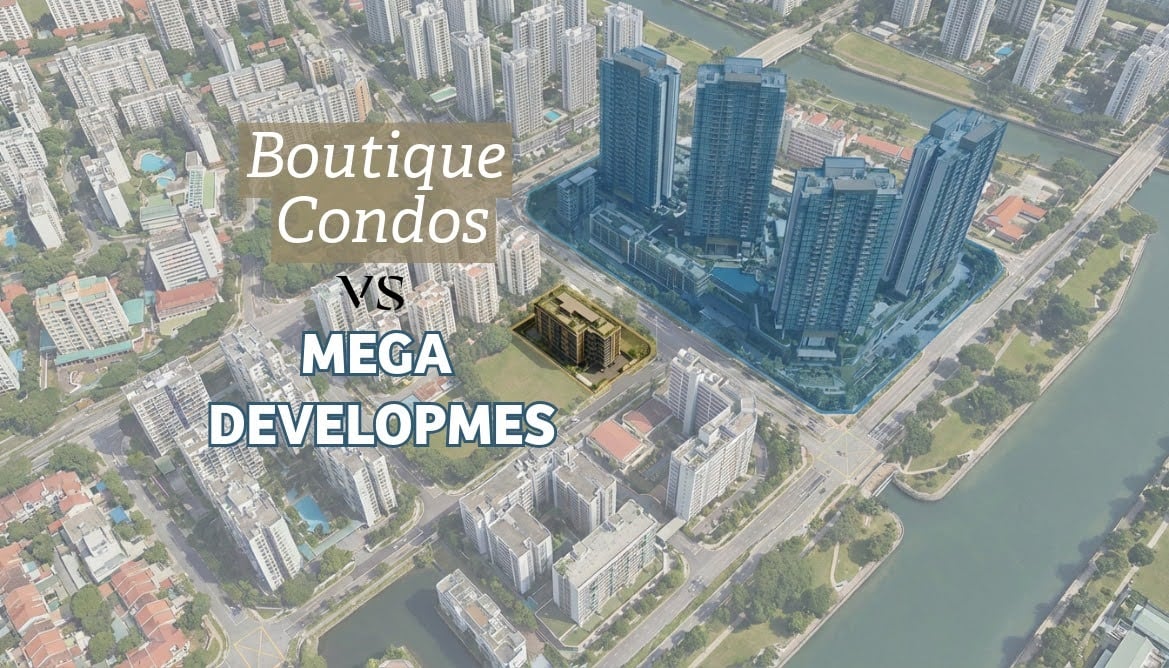
Singapore’s condo landscape spans everything from intimate boutique residences to massive mega developments. When considering Boutique Condos vs Mega Developments, each attracts a different type of homeowner, and each behaves differently across market cycles. Understanding these differences helps buyers choose a home or investment that aligns with their lifestyle, financial goals, and long-term plans.
The Boutique Condos vs Mega Developments guide explains how each segment performs in real-world conditions—lifestyle, maintenance, transaction behavior, risk profile, and long-term value—so buyers know exactly what they are choosing.
Who Each Type Really Attracts
| Boutique Condo Buyers | Mega Development Buyers |
| Singles, couples, empty nesters | Families seeking facilities and convenience |
| Buyers who value privacy and calm | Residents who prefer activity and community |
| Low-density living preference | Desire for all-in-one convenience |
| Residents who rely less on facilities | Residents who use facilities daily |
| Noise-sensitive buyers | Buyers focused on lifestyle offerings |
Understanding Boutique Condos
Boutique condos typically have fewer than 150 units and sit within quieter enclaves. Their appeal lies in exclusivity, privacy, and a more personal living environment.
Because boutique developments transact less frequently, their price charts often appear flatter. This is a function of limited data rather than weaker performance. When demand strengthens, appreciation tends to occur in sharper steps.
Simpler facilities make daily upkeep more predictable, and common areas typically experience less wear and tear.
An upcoming example is Sophia Meadows, a 2026 CCR, District 09 launch designed for buyers who prioritise privacy in a central location.
Understanding Mega Developments
Mega developments often exceed 1,000 units and offer an extensive mix of amenities. These projects appeal strongly to families and active residents who value convenience, facilities, and social spaces.
Popular examples include Treasure at Tampines, Normanton Park, High Park Residences, D’Leedon, The Interlace, and Parc Esta.
A notable new mega-scale option is Thomson View (former Thomson View Condo), which combines scale with connectivity and strong long-term fundamentals.
How Each Living Environment Feels
| Boutique Condo Experience | Mega Development Experience |
| Active, social and facility-rich | Active, social, and facility-rich |
| Low resident traffic | Vibrant communal spaces |
| More personal and intimate | Family-focused and dynamic |
| Ideal for calm routines | Ideal for active lifestyles |
Maintenance & Upkeep Realities
Boutique condos enjoy simpler operations and lower daily wear. However, major repairs—such as repainting or façade upgrades—can be more expensive per household, because costs are shared across fewer units.
Mega developments benefit from economies of scale. Monthly fees often remain competitive, and sinking funds accumulate more quickly. The trade-off is that large facilities experience heavier use and require more consistent long-term reinvestment.
Why Transaction Volume Influences Price Momentum
Boutique condos often register fewer resale transactions each year. With fewer data points, appreciation appears less pronounced—even if the property is performing well fundamentally.
Mega developments generate frequent transactions. Each benchmark sale updates price expectations, creating visible upward momentum and stronger liquidity for future sellers.
Which Offers Better Long-Term Value?
Choosing between Boutique Condos vs Mega Developments is not an apples-to-apples comparison. Tenure shapes long-term behaviour too. The dynamics of freehold vs leasehold condos in Singapore influence how each segment holds value across different market phases.
Boutique condos build value through scarcity. In prime districts where land supply is limited, these developments attract stable owner-occupier demand and often hold value well through market cycles.
The pricing patterns of large-scale projects mirror the behavior seen across many mega-development condos, where transaction volume supports predictable rentability and resale confidence.
Market timing matters as well, and buyers often rely on recognised property market cycles to choose the right entry point for long-term gains.
In summary, boutique condos create long-term value through scarcity, while mega developments create long-term value through scale and liquidity. The better option depends on lifestyle, investment goals, and personal risk profile.
Frequently Asked Questions (FAQ)
1. Are boutique condos harder to sell?
Not necessarily. They appeal to buyers who prioritise privacy, exclusivity, and quiet living.
2. Do mega developments offer better rental demand?
Yes. Their scale, facilities, and layouts appeal to a wider tenant base.
3. Do boutique developments have higher maintenance fees?
They can when major upgrades are required, as costs are shared by fewer households.
4. Which type appreciates better?
Both can perform well. Boutique condos rely on scarcity; mega condos benefit from transaction-driven momentum.
Next Steps
If you’re comparing boutique exclusivity with mega-scale convenience, I can help you shortlist suitable projects, evaluate long-term value, and plan a strategic entry aligned with your goals.