
Last Updated on November 2, 2026
Before renewing your lease, check what buying would require—and whether it would leave you enough room to live comfortably.
Your lease is coming up for renewal. You like having your own space, but another year of rent makes you pause. Could you buy a home of your own instead?
Singapore’s exploration of build-to-rent puts that choice back in focus. The Straits Times reports on the discussion.
For a tenant considering ownership, the useful question is personal: what could you comfortably buy, and what would you have to give up to buy it?
- Rent alone cannot tell you what you can afford to buy.
- Check upfront funds, monthly costs and the savings left after purchase.
- Buying needs to work for your location, space requirements and intended holding period.
- If you keep renting, give the extra time a clear savings or housing goal.
What does another lease cost you?
At $3,000 a month, two more years of rent would total $72,000, assuming no change in rent.
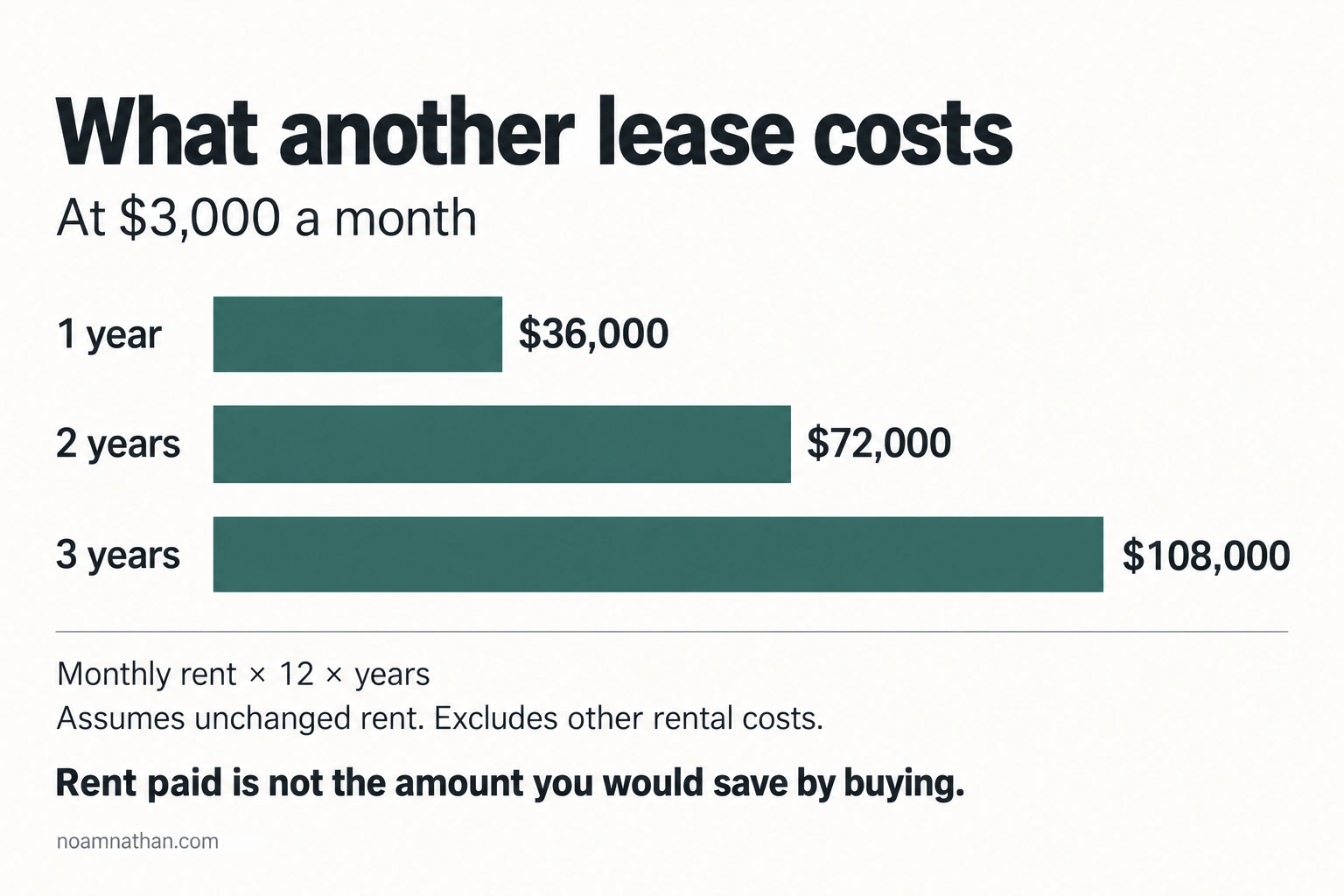
That is a reason to review your options. It is not proof that buying would leave you $72,000 better off.
Rent buys accommodation and flexibility. Ownership brings financing costs, transaction costs and a commitment to a particular home. The better question is whether another rental period improves your eventual buying position—or simply postpones a decision you have not yet examined.
Compare rent with the full cost of ownership
“My rent is similar to a mortgage payment” is a starting point. It is not a complete comparison.
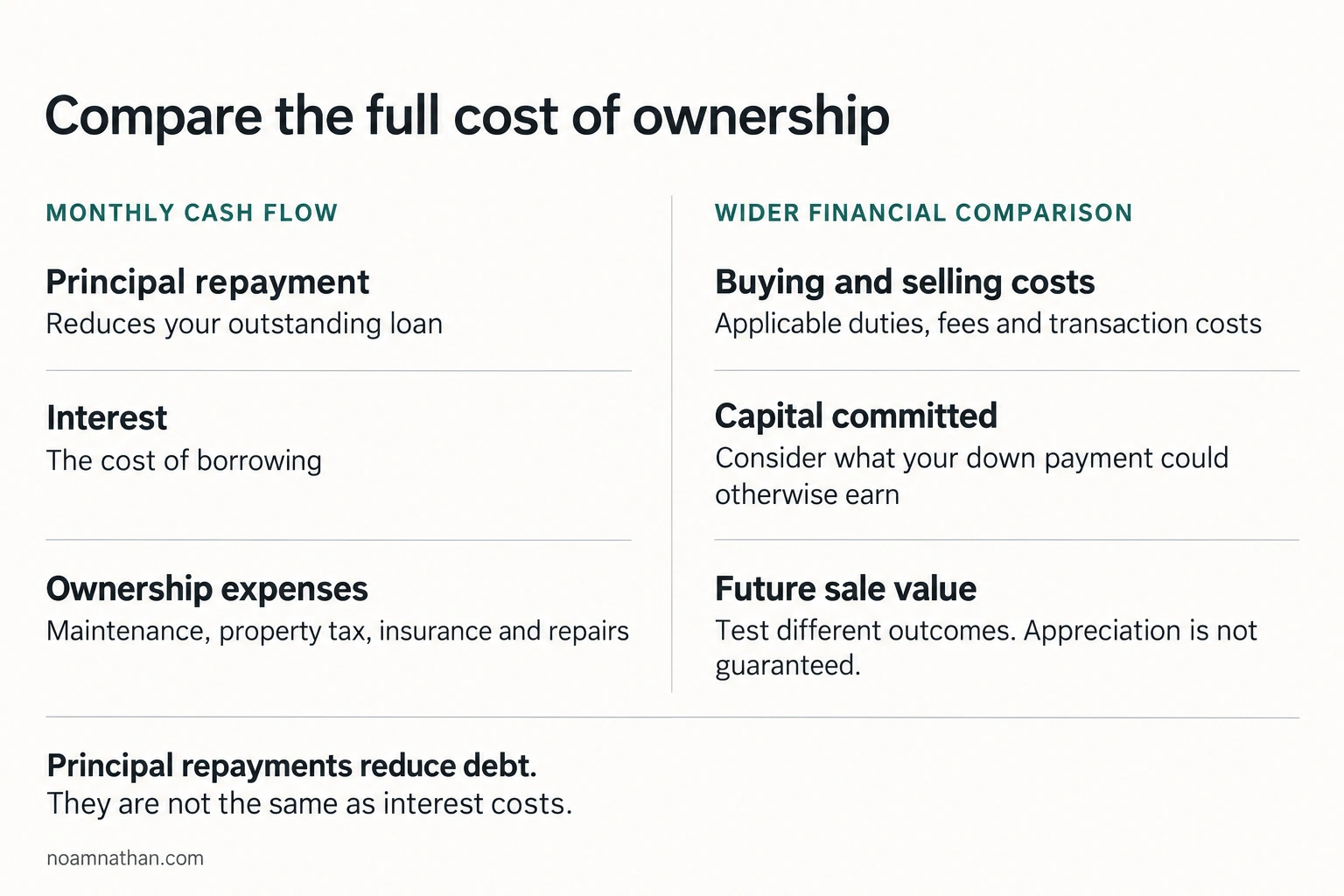
First, check the monthly cash commitment. Then compare the wider financial outcome over the period you expect to stay. Include buying and eventual selling costs, the capital tied up in the home, and different resale-price scenarios.
For the upfront calculation, start with my guide to Buyer’s Stamp Duty and ABSD. Your buyer profile and transaction value matter, so confirm the applicable duty before committing.
A proper budget also includes legal fees, moving costs and any renovation, alongside ongoing ownership expenses. MoneySense’s affordability guide explains the upfront and ongoing commitments.
Three checks before you start viewing
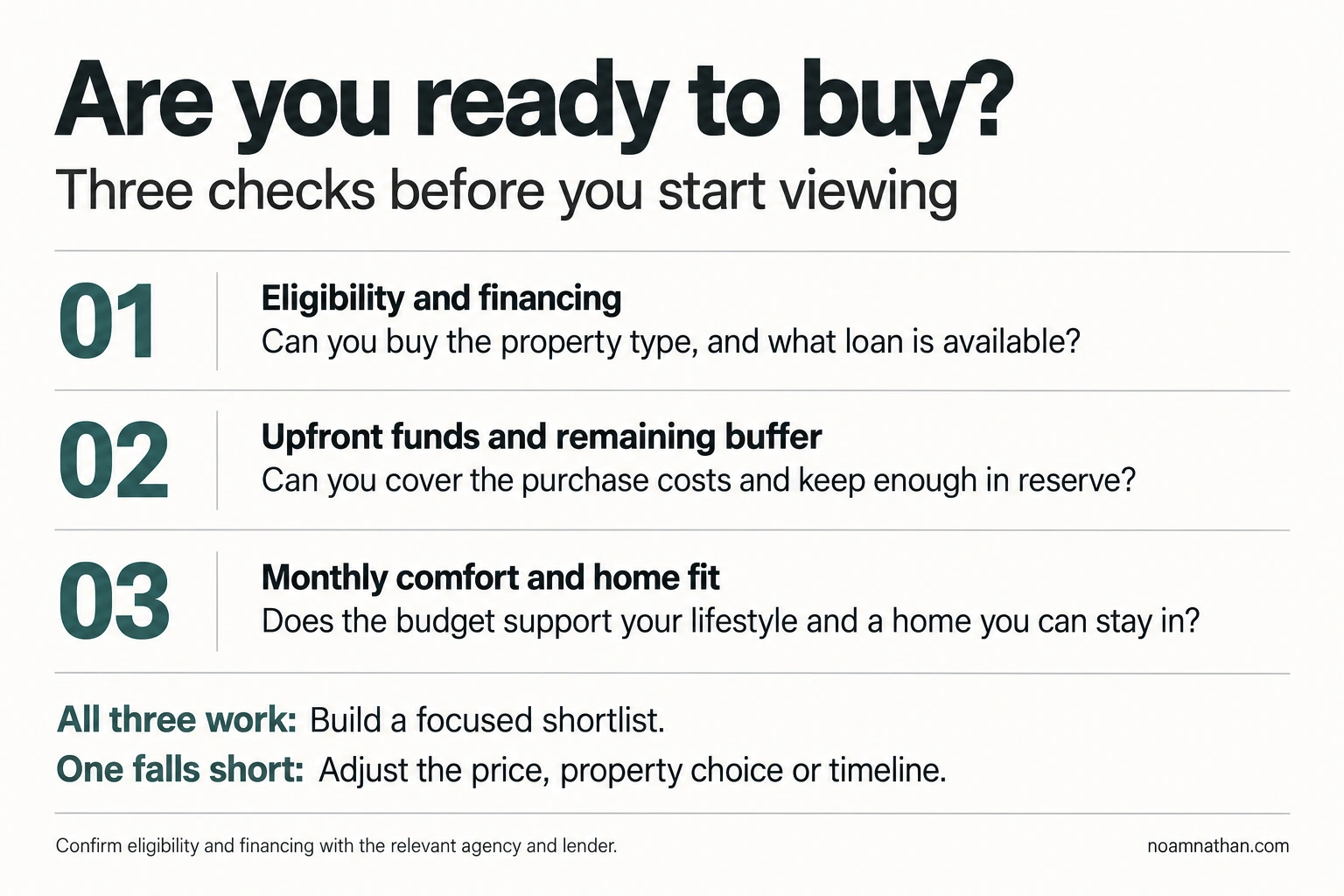
1. Establish eligibility and borrowing capacity
For an HDB purchase, begin with eligibility. My HFE letter guide explains the process and what the assessment covers.
For borrowing, use my TDSR, MSR and LTV guide to understand the different limits. Then confirm the loan available for your own circumstances with the lender. An approved maximum is a ceiling; you can choose to spend less.
2. Check what remains after you buy
A purchase should leave you able to manage unexpected expenses. Separate the funds needed to complete the transaction from the reserve you intend to retain.
Ask when each payment falls due, which funds can be used and whether they will be available in time. My resale condo payment timeline explains why having enough overall is different from having the money ready on the required dates.
3. Test whether the home fits your life
A budget is useful only if it buys a home you can live with. Consider the commute, usable space and how your household might change. Allow for a higher monthly payment or a temporary income reduction in your planning.
If buying requires compromises that would make you want to move again soon, another lease may be the more suitable choice.
Coordinate your purchase with your lease
Your lease expiry is a planning date, not a reason to rush into a purchase.
Work backwards from the likely key-collection date and allow for any renovation, moving time and overlap between homes. Before agreeing to a renewal or assuming you can leave early, review the actual terms of your lease. My tenancy agreement guide provides a starting point.
Once you have found a property, use my checklist before signing an Option to Purchase to prepare for the commitment.
My view: make the next lease a deliberate choice
I would explore buying when the finances leave a comfortable buffer, your plans are reasonably settled and suitable homes exist within your budget.
I would be more cautious if buying uses nearly all your savings, depends on stretching every monthly dollar or leaves you in a home you expect to outgrow quickly.
If you keep renting, decide what the next year should achieve: a stronger deposit, less debt, a clearer household plan or a better-defined property search. That gives the next renewal a purpose.
Frequently asked questions
Is buying always better than renting in Singapore?
No. The result depends on purchase costs, financing, how long you stay, your alternative use of the money and the eventual sale outcome. Renting can suit someone who needs flexibility or more time to prepare.
Can my monthly rent tell me how much I can borrow?
No. A lender assesses your income, debts and other credit criteria, together with the applicable lending rules. Your rent is useful for comparing household cash flow, but it does not establish loan eligibility.
What should I prepare for a home-buying readiness review?
Start with your rent, lease expiry and buying timeline. To assess a realistic range, we can then discuss your age, citizenship, buying arrangement, approximate income, available cash and CPF, existing debts and preferred locations.
Should I buy before my lease expires?
Plan the purchase and move together, allowing for completion, any works and possible overlap. Whether you should renew, extend or move depends on your lease terms and the actual purchase schedule.