Last Updated on September 27, 2026
Estimated reading time: 4 minutes
Singapore shophouses hold a special place in the property market. With their colourful façades and conserved architecture, they continue to attract both homeowners and investors who appreciate history, character, and rarity. As prices rise across key heritage districts, many buyers are asking whether these unique assets offer real long-term investment value. This review provides a closer examination of what makes shophouses so compelling and what factors you should consider before purchasing one.
Overview of Singapore Shophouses
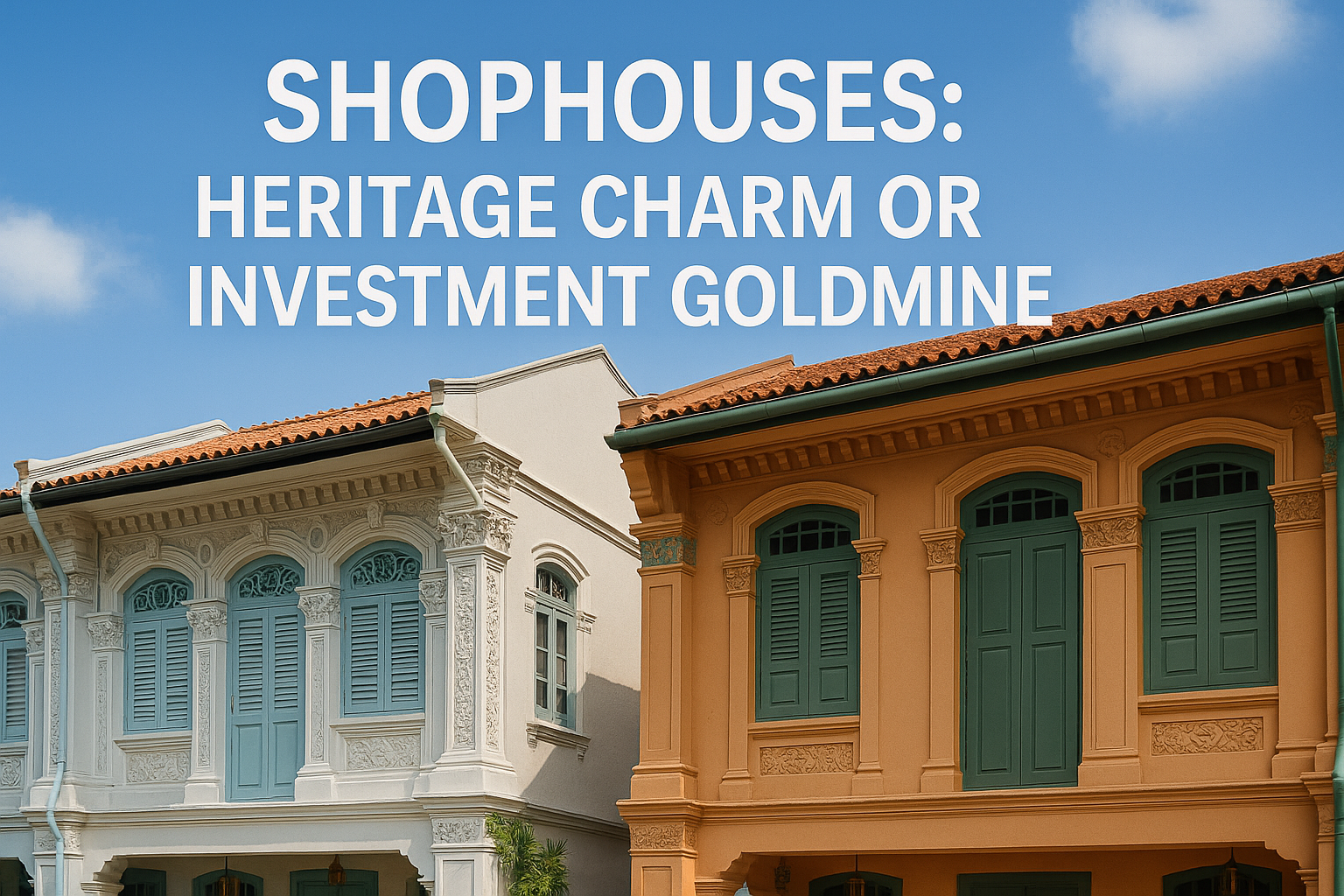
Shophouses are low-rise heritage buildings combining commercial and residential elements. You’ll find them primarily in neighbourhoods such as Chinatown, Joo Chiat, Kampong Glam, and Little India, each with its own cultural identity. Their scarcity and cultural value drive strong demand, particularly from buyers who understand the importance of tenure and long-term resilience. A good starting point is the Freehold Property Analysis, which explains why ownership duration shapes capital growth over decades.
Key Features and Benefits
Architectural character
Shophouses offer a distinct charm that modern developments cannot replicate. High ceilings, timber windows, and colourful architectural details create warm, character-rich spaces. For commercial tenants, the heritage façade can enhance branding and visibility.
Mixed-use flexibility
Depending on zoning, many shophouses permit a blend of work and living spaces within the same structure. This flexibility appeals to boutique offices, creative studios, hospitality concepts, and design-focused retail businesses that benefit from unique spaces.
Limited supply
Strict conservation rules ensure that supply remains extremely limited, protecting heritage value while maintaining consistent demand. Insights from Exploring the Best Areas for Landed Property Investment highlight how conservation neighbourhoods often exhibit stable long-term performance, as buyers value rarity and culture.
Rental versatility
With the right zoning, shophouses can attract a wide range of tenants, including lifestyle, wellness, retail, and boutique F&B. Businesses often pay a premium for character spaces located in city fringe or culturally rich precincts.
Pros and Cons
| Pros | Cons |
| Irreplaceable heritage value | Higher maintenance due to age |
| Strong rental versatility | Renovation costs may be significant |
| Limited supply supports capital appreciation | Conservation rules restrict modifications |
| Strategic locations in cultural districts | Higher entry price than modern units |
Investment Outlook
Shophouses have consistently appreciated in value over the years, driven by affluent buyers seeking rare, legacy assets. They attract strong tenant profiles and often deliver stable long-term returns. Investors should, however, factor in renovation costs and the need to comply with conservation guidelines. These protect architectural integrity but can increase upkeep. For valuation planning, the insights from Property Valuation Singapore provide useful considerations when evaluating heritage assets.
Buyers comparing investment alternatives may also review regulatory impacts such as TDSR rules or financing trends linked to mortgage interest rates in Singapore, which influence affordability and leverage planning.
Who Shophouses Are Best For
Shophouses are an excellent match for:
- Investors seeking culturally significant, limited supply assets
- Business owners who want unique commercial spaces
- Buyers preferring freehold or long tenure properties
- Families wanting spacious heritage homes in vibrant neighbourhoods
They are less ideal for buyers who prefer modern layouts, predictable maintenance or plug-and-play living.
Conclusion: Heritage Beauty with Investment Strength
Singapore shophouses offer a rare blend of cultural heritage, architectural beauty, and long-term investment potential. While they require more hands-on management, their scarcity, strong tenant demand, and historical depth make them compelling for buyers thinking beyond the conventional. With thoughtful planning, a shophouse can be both a treasured home and a resilient wealth holding.
If you’re comparing shophouses with other landed or mixed-use assets, contact me for a personalised consultation.
Frequently Asked Questions (FAQ)
1. Are shophouses good investments?
Yes. They tend to hold value well due to limited supply and strong demand from both tenants and investors.
2. Are conservation rules strict?
Yes. Owners must adhere to URA conservation guidelines to preserve the architectural character.
3. Are shophouses freehold?
Many are freehold, though some carry ninety-nine-year leases depending on the area.
4. Can any business operate in a shophouse?
It depends on zoning. Some allow retail or offices, while others permit F&B or residential use.
5. Do shophouses appreciate faster than condos?
They often appreciate steadily due to scarcity, although performance varies by district and tenant mix.