Introduction: Why tenancy clauses matter more than most tenants realise
Most tenancy disputes in Singapore don’t begin with unreasonable landlords or difficult tenants. They begin when tenants skim clauses, misunderstand them, or assume they are “standard”.
Although landlords and agents commonly use tenancy agreement templates, landlords ultimately shape each agreement. Once both parties sign, the terms become binding, and many tenants only realise the implications of certain clauses after a dispute arises.
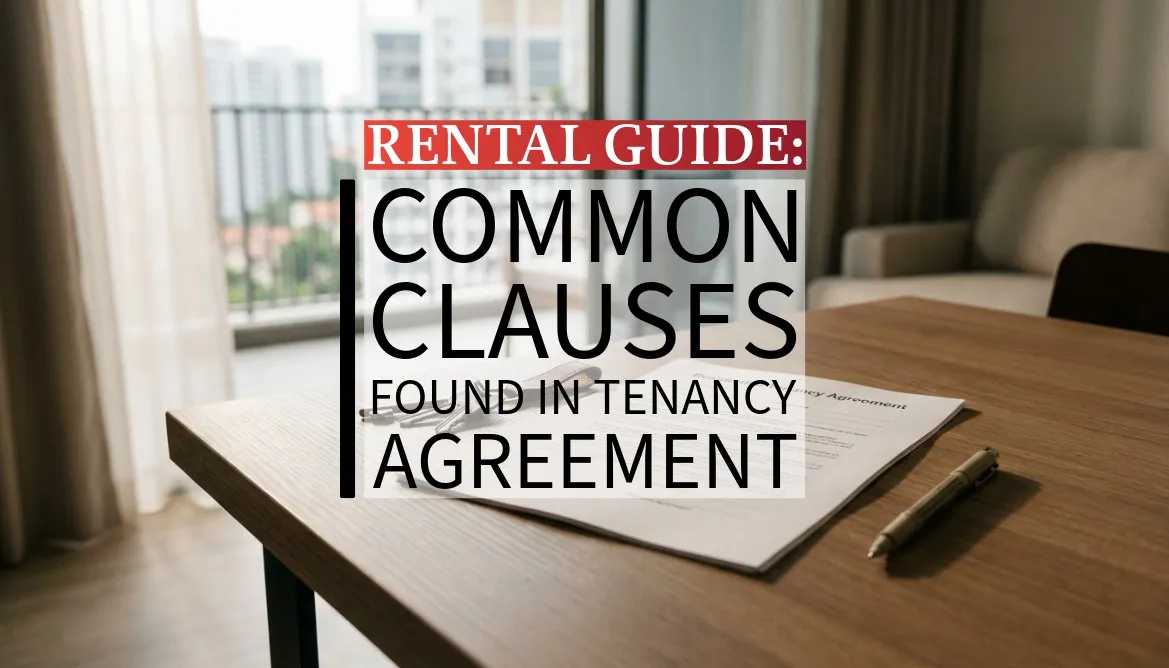
This guide breaks down the most common clauses found in tenancy agreements in Singapore, explains why they matter, and highlights what tenants and landlords should pay attention to before signing.
Who controls the tenancy agreemnet - and why it matters
In Singapore, estate agencies and the Council for Estate Agencies (CEA) provide standard tenancy agreement templates to help create consistency. However, these templates are guides, not mandatory contracts.
The final tenancy agreement is subject to:
- The landlord’s preferences
- Negotiated terms (if any)
- What both parties ultimately agree to and sign
Once signed, the agreement governs the entire tenancy period. This is why it’s critical for tenants to understand not just what the clauses say, but how they work in practice.
Quick Overview: Common Tenancy Clauses at a Glance
-
Schedule & Lease Duration
The move-in date and when payments are to be made. The length of the tenancy and by when the tenant should inform the landlord on renewal or intent to terminate. -
Utilitues & Maintenance
Condo maintenance fees are paid by the landlord. Landed houses, some of the expenses are paid by the tenant. Under this clause you'll find info on the roles & responsibilities of each party and who pays for what. -
Sale with tenancy
The contract may include a minimum occupancy period & notice period OR sold with the tenancy in its entirety. The agreement will likely mention the arrangement for when potential buyers can view the property. -
Identity of Parties & Occupiers
The identity of all the occupiers (tenants) which can't be more than eight unrelated persons. It will also include the landlord's home address which should be different than the one just rented. -
Early Termination (Diplomatic Clause)
Normally only applies to foreigners on a 2 year lease and above on a 12+2 term, which means after 12 months with a 2 months notice period. (Subject to contract). -
Air-Conditioning Servicing
The tenant will need to ensure the air-conditioners are being serviced and cleaned. Most commonly signed as an annual contract with quarterly servicing. (The tenant pays for it) -
Minor Repair Clause
After the 30 days defect period, any minor repairs amounting between $200-$300 (subject to contract) is to be paid by the tenant. Should the amount exceed, landlord will top-up the difference. -
Upkeep of the Property
A detailed report states the condition of the property at handover and may require the tenant to dry clean the curtains and arrange professional cleaning of the home. Normal wear and tear is excluded.
Detailed explanantion of common tenancy clauses
Schedule and lease duration
This clause outlines:
- The commencement date of the tenancy
- The length of the lease (typically one or two years)
- Rent payment cycles
- When and how renewal or termination notice must be given
Tenants often overlook notice deadlines, which can result in unintended renewals or forfeited deposits. Always confirm whether notice periods are calendar-based or fixed-date based.
Utilities and maintenance responsibilities
For condominiums, monthly management and maintenance fees are typically paid by the landlord. For landed properties, some maintenance costs may fall on the tenant.
This clause usually specifies:
-
- Utilities (electricity, water, gas)
- Landscaping or pool maintenance (for landed homes)
- What constitutes tenant versus landlord responsibility
Clarity here helps avoid disputes over what is considered “maintenance” versus “repair”.
Sale with tenancy clause
This clause addresses what happens if the landlord sells the property during the tenancy.
This clause usually specifies:
- Sale subject to existing tenancy
- Minimum Occupancy periods
- Conditions for buyer viewings
Tenants should pay attention to notice requirements and viewing frequency, especially if privacy is a concern.
Early termination (Diplomatic Clause)
Applicable only to foreign tenants on two-year leases, this clause allows early termination under specific conditions — commonly after 12 months with a notice period.
Key points to watch:
- Whether proof of relocation is required
- Exact notice period wording
- Whether rent penalties apply
Diplomatic clauses are not automatic and must be clearly stated.
Air-conditioning servicing
Most tenancy agreements require tenants to:
- Service air-conditioning units regularly
- Engage professional servicing
- Maintain servicing records
This is a frequent source of disputes at handover, particularly if servicing schedules are not followed.
Minor repair clause
After the initial defect liability period (usually 30 days), tenants are typically responsible for minor repairs up to an agreed cap — commonly between $200 to $300 per item, subject to contract terms.
If repair costs exceed the cap:
- The tenant pays up to the limit
- The landlord covers the balance
Understanding the Minor Repair clause helps avoid misunderstandings over wear and tear versus chargeable repairs.
Upkeep and condition of the property
This clause governs how the property should be returned at the end of the tenancy.
It often references:
- Inventory and condition reports
- Professional cleaning requirements
- Curtain dry-cleaning or reinstatement obligations
Normal wear and tear is generally excluded, but clarity at handover is crucial.
Legal requirements tenants should know in Singapore
Regardless of what a tenancy agreement states, the following apply by law:
- Minimum lease duration:
- Private properties: 3 months
- HDB flats: 6 months
- Occupancy limits:
- Maximum of six unrelated persons per property
- Short-term stays:
-
Airbnb and similar arrangements must comply with minimum stay rules
-
Typical residential leases in Singapore run for one or two years.
Common mistakes tenants make before signing
Some of the most frequent issues arise when tenants:
- Assume all clauses are “standard”
- Do not clarify repair caps
- Overlook early termination mechanics
- Fail to reconcile inventory lists with actual condition
Many disputes can be avoided simply by clarifying expectations before signing, rather than relying on assumptions.
Final thoughts: Read the clauses before they’re enforced
A tenancy agreement is more than a formality — it defines rights, responsibilities, and remedies for both parties throughout the lease.
Taking the time to understand common clauses, asking the right questions, and seeking professional guidance where necessary can prevent unnecessary disputes and ensure a smoother rental experience for everyone involved.