Last Updated on August 24, 2026
Estimated reading time: 11 minutes
When considering the different types of housing in Singapore, it’s helpful to note that residential homes generally fall into a few broad categories. Understanding these categories makes it easier to navigate property listings, whether you are renting in Singapore, buying property in Singapore, or simply comparing the different types of property in Singapore.
The 3 Main Housing Categories in Singapore
There are three main housing categories you should be familiar with, and it is essential to understand each type of housing in Singapore:
- Public housing: government-subsidized homes known as HDB flats, including BTO and resale HDB flats
- Public–Private Hybrid: Executive Condominiums (ECs)
- Private housing:
- Private landed property
- Private non-landed property – apartments and condominiums
In this guide, we introduce each housing type found in Singapore and explain how they differ, with slightly more detail on private landed and non-landed homes.
Quick Comparison of Housing Types in Singapore
This simplified overview highlights the main differences. Eligibility and ownership rules vary by buyer profile and property, so use it as a starting point rather than a legal checklist.
| Housing type | Typical tenure | Main things to know | Typical profile |
|---|---|---|---|
| HDB flats | Usually 99-year leasehold | Public housing with eligibility, MOP and resale rules. | Eligible Singapore Citizen households and singles; eligible SPR households may consider resale flats. Foreigners cannot buy HDB flats. |
| Executive Condominiums (ECs) | Usually 99-year leasehold | Private-style facilities, with HDB eligibility and resale restrictions in the earlier years. | Eligible households comparing HDB upgrading with condo living. Foreign ownership is generally possible only after full privatisation. |
| Private condos and apartments | Commonly 99-year, 999-year or freehold | Private non-landed housing; condos typically offer more shared facilities than apartments. | Local and foreign buyers seeking private housing, subject to financing, taxes and other purchase requirements. |
| Conventional landed homes | Leasehold or freehold | More space and privacy, but greater upkeep and a higher entry barrier. | Mainly Singapore Citizen buyers. Foreign buyers generally require prior SLA approval. |
| Strata landed homes | Leasehold or freehold | Landed-style living within a strata development, with shared facilities and maintenance fees. | Buyers wanting a landed-home format with shared management. Foreign ownership depends on the development and may require SLA approval. |

HDB Flats in Singapore
Public housing in Singapore is managed by the state’s Housing and Development Board (HDB), hence these homes are commonly referred to as HDB flats. This category forms the backbone of Singapore’s residential landscape, with around 80% of resident households living in HDB estates, and the vast majority being homeowners.
New HDB flats are sold to eligible Singapore Citizen households. Permanent Resident households cannot buy new HDB flats but may purchase resale HDB flats subject to conditions such as the Ethnic Integration Policy (EIP) and the Singapore Permanent Resident (SPR) quota. HDB flats are primarily intended for owner-occupation; whole-flat rental is regulated and generally requires HDB approval after the MOP for eligible flats, but owners of Plus and Prime flats and SPR households cannot rent out the whole flat.

Landed Homes in Singapore
Owning a landed home means owning the land on which the property stands. In land-scarce Singapore, this makes landed housing relatively rare and highly sought after. These homes are typically associated with larger living spaces, greater privacy, and a higher level of exclusivity.
Due to their size and upkeep requirements, landed homes usually involve higher maintenance responsibilities. Under SLA foreign ownership rules, foreign ownership of landed residential property requires prior approval from the Singapore Land Authority’s Land Dealings Approval Unit (LDAU). This approval framework covers bungalows, semi‑detached and terrace houses, strata‑landed houses not within approved condominium developments, and landed homes at Sentosa Cove. Foreigners may generally purchase private apartments and condominiums, as well as strata‑landed units within approved condominium developments, without LDAU approval.
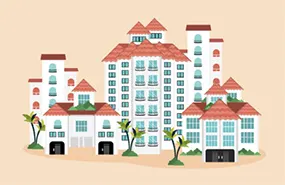
Private Condominiums and Apartments
This category includes both apartments and condominiums. Apartments are typically part of smaller residential developments and come with fewer shared facilities. Condominiums, on the other hand, usually offer a wider range of amenities such as swimming pools, gyms, security, and recreational spaces.
Private non-landed homes generally come with fewer usage restrictions compared to public housing and are popular among both homeowners and renters. For many people comparing a Singapore condo vs HDB flat, the key differences are usually eligibility, facilities, tenure, maintenance fees, rental flexibility, and purchase price.
Executive Condominiums in Singapore
Executive Condominiums, or ECs, are a hybrid form of housing that sits between public housing and private condominiums. In terms of appearance and facilities, ECs often resemble private condominiums, featuring amenities such as swimming pools, gyms, and landscaped common areas.
Developed by private developers but governed by HDB rules initially, ECs are subject to an initial MOP and resale restrictions. Projects with land sales tenders closing before 8 May 2026 generally have a 5-year MOP and become fully privatised 10 years after TOP, while projects with tenders closing on or after 8 May 2026 have a 10-year MOP and become fully privatised 15 years after TOP.
EC resale timing matters
A newer EC may still be limited to eligible buyers, while a fully privatised EC is treated more like a private condominium and may be sold to foreigners.
HDB Standard, Plus and Prime Flats
Under current HDB rules, new flats launched from the October 2024 sales exercise are classified as Standard, Plus or Prime flats. Standard flats broadly follow the familiar HDB framework, while Plus and Prime flats are generally located in more attractive areas and come with tighter owner-occupation rules.
Standard, Plus and Prime are not interchangeable
Plus and Prime flats have a longer 10-year MOP, subsidy recovery upon resale, tighter resale eligibility conditions, and restrictions on renting out the whole flat. These classifications are important when comparing BTO flats, resale HDB flats, and longer-term plans for buying property in Singapore.
Freehold vs Leasehold Tenure
Homes in Singapore are commonly held on either a leasehold or freehold basis. Leasehold properties are typically held for a fixed period, commonly 99 years, whereas freehold properties allow indefinite ownership of the land. This distinction affects ownership but does not change everyday living or rental arrangements. The type of housing in Singapore often determines the tenure of the property.
Landed Property Types in Singapore
Below is a closer look at the different types of private landed homes found in Singapore. These vary within the broader type of housing available in Singapore.
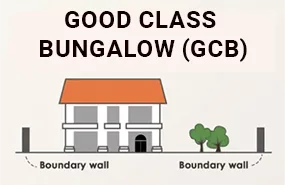
Good Class Bungalows (GCBs)
Good Class Bungalows (GCBs) represent the most exclusive form of landed housing in Singapore. There are only 39 designated areas where these homes can be built, each with a minimum land size of 1,400 m² (approximately 15,070 ft²). These properties are typically valued in the tens of millions.
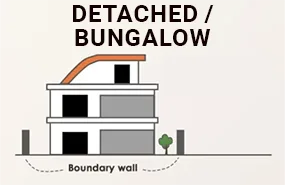
Detached Houses and Bungalows
Detached houses, commonly referred to as bungalows, are standalone structures built within their own plots of land. They do not share walls or roofs with neighbouring properties and must have a minimum land size of 400 m² (approximately 4,306 ft²). Standard detached houses can be found in landed housing areas across Singapore, while bungalows within designated GCB areas must meet the stricter Good Class Bungalow requirements.
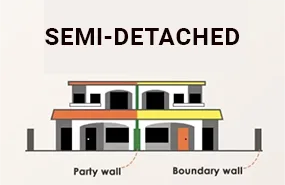
Semi-Detached Houses
Semi-detached houses, often referred to as Semi-Ds, are pairs of homes built side by side and connected by a shared party wall. They are typically attached along the sides, although some designs are built back-to-back. Semi-detached houses and corner terraces usually have a minimum land size of 200 m² (approximately 2,153 ft²).
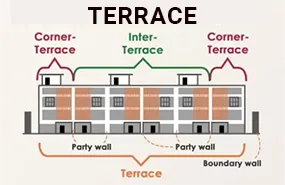
Terrace Houses
Terrace houses form part of a row of at least three homes that share common boundary and party walls. These homes typically sit on land sizes of around 150 m² (approximately 1,615 ft²) and are among the most common types of landed housing in Singapore.

Shophouses
Shophouses are historic terraced buildings. Today, conserved shophouses may be zoned commercial, residential, or mixed-use under Urban Redevelopment Authority guidelines, so actual uses vary by property.
Practical Examples for Buyers and Renters
A Singapore Citizen family may compare a new BTO flat, a resale HDB flat, an EC, or a private condo depending on budget, eligibility, and how long they intend to stay. A household that wants subsidies and a lower entry price may start with HDB, while a household looking for private facilities may compare ECs and private condominiums.
An SPR household cannot buy a new HDB flat, but may be able to buy a resale HDB flat if it meets the applicable rules. SPR households can also consider private non-landed homes, subject to financing, taxes, and other purchase requirements.
A foreign buyer generally looks at private apartments and condominiums first, because landed residential property requires approval under SLA rules. A renter, meanwhile, will usually compare location, budget, facilities, lease terms, and whether the property is approved for rental.
Common Questions About Housing Types in Singapore
Can foreigners buy property in Singapore?
Foreigners can generally buy private non-landed homes such as apartments and condominiums. Landed residential property is restricted and requires prior approval from the Singapore Land Authority.
Can PRs buy HDB flats?
Permanent Residents cannot buy new HDB flats directly from HDB, but eligible SPR households may buy resale HDB flats subject to HDB rules, including the SPR quota and other eligibility conditions.
What is the difference between an EC and a condo?
An EC is developed by a private developer and may look similar to a private condo, but it starts with HDB eligibility rules, an MOP, and resale restrictions. A private condo is private housing from the start and is not subject to the same EC resale stages.
Can HDB flats be rented out?
HDB flat rental is regulated and requires HDB approval. Whole-flat rental is generally available only for eligible flats after the MOP, while Plus and Prime flats and SPR-owned flats cannot be rented out as a whole unit.
What is the difference between freehold and leasehold?
Leasehold property is held for a fixed period, commonly 99 years in Singapore. Freehold property allows indefinite ownership of the land, although planning rules, redevelopment potential, and market demand still affect value.
Bringing It All Together
Singapore’s housing landscape may seem complex at first, but it becomes much easier to understand once you are familiar with the main housing categories and how they differ. From public housing and executive condominiums to private apartments, condominiums, and landed homes, each type serves a distinct purpose within a structured system.
Whether you are new to Singapore, exploring rental options, or simply trying to make sense of property listings, understanding the various housing types in Singapore provides a useful foundation. This guide is intended as a starting point — a simple reference to help you navigate Singapore’s residential options with greater clarity and confidence.
If you are deciding between an HDB flat, EC, private condominium or landed home, I can help you compare the eligibility rules, practical trade-offs and likely buyer journey for your circumstances. The useful question is not which category is best in general, but which one fits your plans, budget and holding period.